


In the highly competitive global steel industry, where operational efficiency, metallurgical quality, and environmental sustainability are the primary benchmarks for market leadership, Hormozgan Steel Company (HOSCO) stands out as a critical player in the Middle East. Established in the Persian Gulf Mining and Metal Industries Special Economic Zone, approximately 13 kilometers west of Bandar Abbas, HOSCO occupies 95 hectares of strategically significant land. Built to leverage the region’s vast natural gas reserves and its proximity to deep-water ports, HOSCO specializes in the production of high-quality steel slabs—the essential semi-finished product for downstream industries such as flat-rolled sheet production, shipbuilding, and large-diameter pipe manufacturing. Within the broader framework of the Mobarakeh Steel Group (MSG) and the Iranian national steel industry, HOSCO is not merely a production plant; it is a strategic hub that ensures supply chain resilience and fosters Iran’s growing presence in Asian, European, and African export markets.
The history of HOSCO is rooted in a vision of industrial autonomy. Its inception dates back to 1999, when the Iranian Economic Council approved the construction of a massive steel complex in Hormozgan Province. This project was designed as the largest industrial initiative of the Ministry of Industries and Mines at the time, aiming to utilize the Persian Gulf’s gas reserves for Direct Reduced Iron (DRI) production while facilitating exports via adjacent maritime terminals. Construction officially began in 2006, involving extensive excavation, specialized foundation work, and the building of dedicated steel jetties. By 2010, the steelmaking unit entered the hot testing phase, with the first Electric Arc Furnace (EAF) melt achieved in August of that year. The official inauguration in early 2012 marked a milestone in Iran’s industrial history. This strategic timeline demonstrates a persistent commitment to industrial excellence, turning a coastal desert into a metallurgical powerhouse through precise engineering and long-term planning.
In the decade following its launch, HOSCO has demonstrated exponential growth, evolving from a nascent unit into a high-capacity, mature producer. Performance data from the first quarter of 2025 illustrates this progress: DRI production reached 504,306 tonnes, representing a 7.8% growth compared to the same period in the previous year. Slab production stood at 440,832 tonnes, alongside significant outputs of briquettes and lime. With cumulative slab production exceeding 11 million tonnes since its inception, HOSCO has proven its operational stability and technical proficiency. These achievements are the result of continuous investment, process engineering optimization, and a steadfast commitment to international technical standards, positioning HOSCO as a reliable bulwark against global supply chain fluctuations. The company’s ability to maintain high utilization rates even during periods of market volatility highlights its role as a stable supplier within the global steel ecosystem.
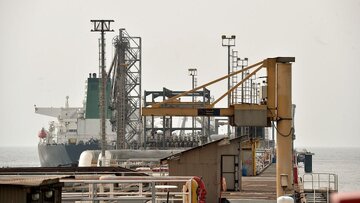
HOSCO’s strategic geographic location is an engineering masterstroke that maximizes logistical efficiency. Its proximity to the Persian Gulf provides direct access to key international ports like Shahid Rajaee and Bahonar, significantly reducing the costs of transporting bulk raw materials such as iron ore pellets. This location also accelerates the export process for finished slabs, allowing the company to reach global markets more efficiently than inland competitors. Being situated within a Special Economic Zone offers advantages such as customs exemptions and ready-to-use infrastructure, optimizing project timelines. From a technical perspective, the proximity to natural gas pipelines ensures the stable operation of the Midrex direct reduction modules, which are critical for producing high-quality DRI. Simultaneously, the advanced seawater desalination facilities, with a daily capacity of 30,000 cubic meters, provide a continuous supply of industrial water without straining local resources. The plant’s dedicated jetties have an annual discharge capacity of 10 million tonnes, making the supply chain resilient against maritime disruptions and ensuring that raw materials are always available for the smelting process.
At the core of HOSCO’s operations is an integrated production chain utilizing modern metallurgical technologies. The DRI production utilizes Midrex furnaces, combining 70% natural gas with 30% shaft off-gas to achieve high metallization rates (Fe > 94%), ideal for EAF charging. This high-purity DRI is essential for producing the specialized slab grades that international customers demand. The steelmaking stage involves two 120-tonne EAFs equipped with Eccentric Bottom Tapping (EBT) and secondary ladle metallurgy for precise chemical control. Slag conditioning through lime injection minimizes refractory wear, extending the equipment’s operational life. Continuous casting is performed on a six-strand Danieli machine, producing slabs with thicknesses of 200 to 250 mm and widths up to 2500 mm. Casting speeds reach 1.2 meters per minute, utilizing dynamic secondary cooling and Soft Reduction technology to prevent internal cracking. These technological features ensure that every slab produced at HOSCO meets the most rigorous quality standards, whether for structural use or for the high-pressure environments of the oil and gas industry.
Hormozgan Steel Holding acts as an integrated entity encompassing HOSCO and key expansion projects like the “Simin Hormoz Star” project. The holding drives regional development with a goal of reaching a production capacity of 3.3 million tonnes of slabs. The major shareholder is Mobarakeh Steel Company (MSC), with a 15.96% stake, illustrating a deep strategic bond. This synergy between HOSCO and MSG—which ranks 23rd among the world’s top steel producers—is a prime example of vertical integration. MSC sources a substantial portion of its required slabs from HOSCO, thereby minimizing reliance on vulnerable maritime import routes. This integration reduces MSG’s raw material costs by 10% to 15%, making it more competitive against Asian rivals. By securing its internal supply chain, Mobarakeh Steel Group ensures that its downstream rolling mills have a consistent supply of feedstock, which is vital for maintaining production quotas during times of global geopolitical uncertainty.
In terms of sustainability, HOSCO has achieved remarkable success by aligning its industrial growth with environmental stewardship. It has achieved Zero Liquid Discharge (ZLD) through advanced wastewater treatment and environmentally friendly lime production. The long-term goal is to achieve Net-Zero carbon emissions by 2050, a target that is being pursued through aggressive R&D in green hydrogen and carbon capture technologies. Expansion projects currently underway, such as the third DRI module and the Simin Hormoz Star project, aim to double slab production capacity while minimizing the environmental footprint. These initiatives involve flexible Midrex converters capable of utilizing hydrogen as a reducing agent, moving away from traditional fossil fuels. Looking toward 2030, HOSCO targets a 5-million-tonne production capacity, pioneering green steel in the region through Carbon Capture, Utilization, and Storage (CCUS) pilots. These efforts demonstrate that heavy industry and environmental responsibility can coexist through technological innovation.
Operational challenges, such as gas supply fluctuations, are managed through the recycling of process off-gases and the enhancement of thermal efficiency. International sanctions are countered through the domestic manufacturing of spare parts and the cultivation of a robust local supplier network. Environmental compliance is maintained through advanced bag filters for dust control and low NOx lancing techniques, ensuring that the plant meets International Finance Corporation (IFC) standards. HOSCO is not only securing domestic supply chains but is also driving continental influence as a premier exporter of semi-finished steel products. For international professionals, it represents a model of how strategic location, technical integration, and a commitment to sustainability can elevate a regional producer to the global stage. By fostering a culture of continuous improvement, HOSCO ensures that it remains at the cutting edge of metallurgical science and operational excellence.
Furthermore, the company’s commitment to social responsibility and regional economic development has turned it into a cornerstone of the Hormozgan community. By providing thousands of high-tech jobs and supporting local infrastructure, HOSCO is not just producing steel; it is building a sustainable economic future for the south of Iran. Its integration of Industry 4.0 technologies, including digital twins for casting optimization and AI-driven maintenance systems, positions it as a leader in the Fourth Industrial Revolution. As the global demand for high-quality, sustainably produced steel continues to grow, HOSCO’s role as the strategic gateway for Mobarakeh Steel Group becomes even more vital. The company’s ongoing expansion into new international markets, combined with its focus on high-margin specialized products, ensures that it will remain a pillar of industrial strength for decades to come.
In conclusion, Hormozgan Steel Company is a prominent symbol of engineering ingenuity set within a resource-rich environment. Its pivotal role in the Hormozgan Steel Holding and the Mobarakeh Steel Group goes beyond securing domestic supply chains; it drives continental influence. Through its pursuit of technological leadership and environmental sustainability, HOSCO is redefining the standards for steel production in the 21st century. It stands as a testament to the power of strategic planning and technical expertise in overcoming industrial challenges and achieving global success. The synergy within Hormozgan Steel Holding, particularly through the Simin Hormoz Star project, ensures that HOSCO will continue to be a dominant force, contributing significantly to the national goal of 55 million tonnes of annual steel capacity. By effectively leveraging its maritime access and gas resources, HOSCO is not only a steel producer but a fundamental architect of regional industrial growth.



نظر شما