


According to the analytical news outlet IRASIN, the future of the steel industry has become increasingly dependent on the ability of enterprises to leverage knowledge, advance technology, and respond to production constraints. To sustain their development path, steelmakers must continuously refine production methods, manage resource consumption, and transition technological solutions from the research phase to the factory floor. Under such conditions, the link between academia and industry assumes strategic importance.
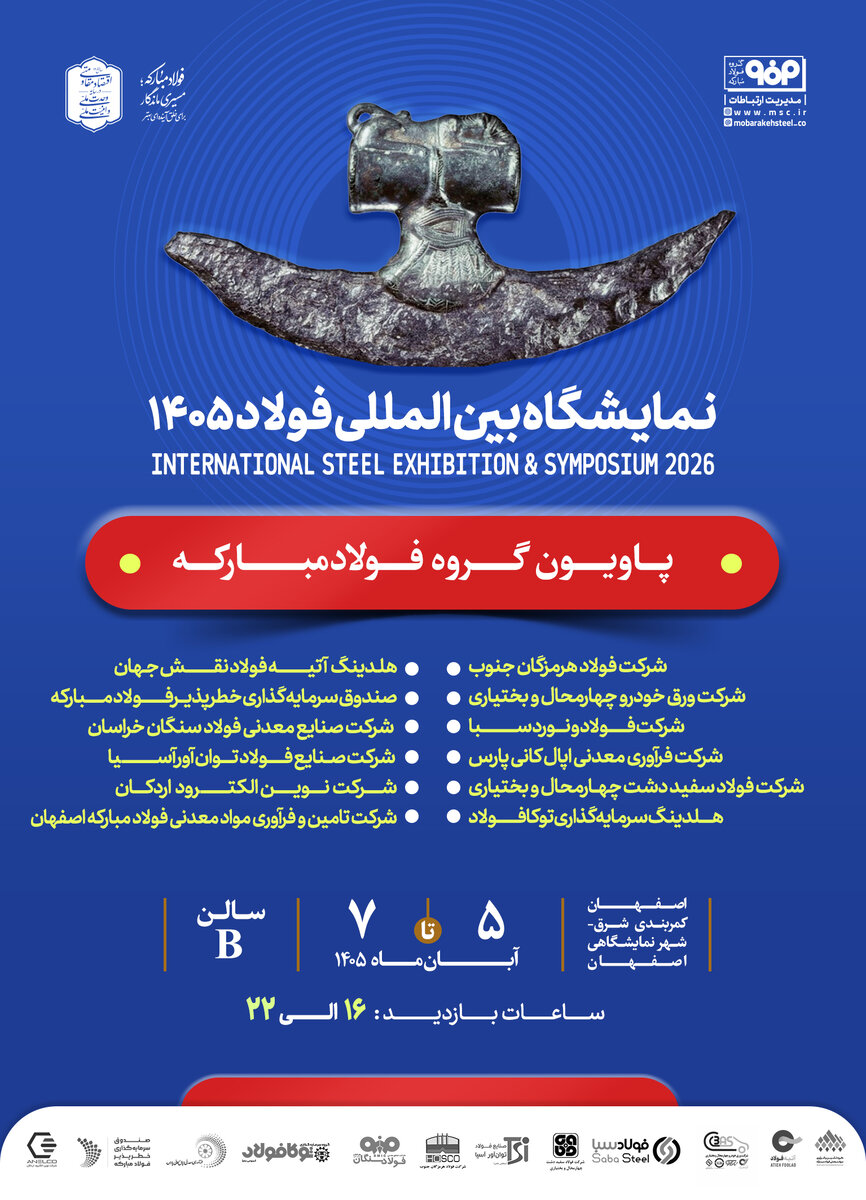
The 28th International Steel Exhibition and Symposium, scheduled for October 27–29 in Isfahan, centers on creating synergy across the scientific and industrial ecosystems to accelerate green steel production, offering a timely opportunity to address these challenges. The participation of Mobarakeh Steel Group and its subsidiary companies raises a pivotal question: how can research capabilities be transformed into an effective driver of industrial development?
In this environment, research creates economic value for industry only when it solves tangible operational problems. Enhancing equipment efficiency, cutting energy consumption, recovering usable materials, controlling emissions, and developing advanced manufacturing techniques represent key intersection points between academic research and factory demands. Converting research ideas into industrial solutions requires technical evaluation, cost assessment, and feasibility testing at production scale. Viewed from this perspective, the central theme of the 2026 Steel Symposium—"Synergy of the Scientific-Industrial Ecosystem to Accelerate Green Steel Production"—gains profound significance. Universities provide research capacity, knowledge-based enterprises contribute to technological solution design, and industrial firms offer the real-world operational environments needed to evaluate and deploy these solutions.
Technology Development Through Academia-Industry Linkages
Collaboration between universities and industry yields meaningful results only when it moves beyond information exchanges and academic presentations. Most factory challenges emerge under actual operating conditions, requiring technical constraints, implementation costs, and operational mandates to be addressed simultaneously. Conversely, universities and research centers can draw upon scientific methodology and specialized expertise to analyze and resolve these challenges.
Specialized symposiums enable direct engagement between researchers and industry realities. This direct interaction is particularly vital for Iran's steel industry, where technological development must account for infrastructure limitations, production costs, and plant-specific operating conditions. A solution that yields optimal results in one plant or country may not be directly replicable elsewhere without contextual adaptation.
However, translating knowledge into industrial applications extends beyond research collaboration; it requires active engagement with equipment suppliers, technical service providers, and engineering entities capable of implementing new technologies. The International Steel Exhibition serves as a dedicated platform to build these connections.
Bridging Technology and Market Needs at the Steel Exhibition
By bringing together manufacturers, raw material suppliers, equipment fabricators, technical-engineering service providers, and knowledge-based enterprises, the International Steel Exhibition creates opportunities to identify technological solutions and evaluate collaborative potential across the steel value chain. This interaction promotes familiarity with emerging technologies and highlights existing capacities to optimize industrial processes.
Technological advancement in the steel industry extends beyond designing novel production methods. Equipment quality, component and consumable availability, control system reliability, and maintenance capabilities directly influence production line performance. Consequently, structured engagement with suppliers and technology firms helps identify tailored solutions that align with factory requirements and enhance operational productivity.
Mobarakeh Steel Group and the Imperative of Aligning Production with Technology
The participation of Mobarakeh Steel Group and its subsidiaries in the 2026 International Steel Exhibition and Symposium aligns with the broader industry imperative to bridge production, research, and technology development. For an enterprise of this scale, scientific interaction generates maximum value when anchored in the concrete needs of production lines. Defining precise operational challenges, collaborating with relevant research groups, and evaluating proposed technologies clears the path toward converting knowledge into economic value. Within this framework, research becomes a key driver for performance optimization, waste reduction, and competitive enhancement.
Furthermore, transitioning toward green steel demands solutions that are both technically reliable and economically viable. Engaging with academic institutions and technology partners allows steelmakers to explore new avenues for managing energy consumption, refining operational processes, and mitigating the environmental impact of steel production.
Lasting Value Beyond the Symposium and Exhibition
The 2026 Steel Symposium in Isfahan provides a timely platform for the scientific community and industrial leaders to convene at a juncture when technology development and sustainable manufacturing have become decisive considerations in strategic decision-making. However, the ultimate significance of this event lies in its ability to foster enduring collaborations that address real production challenges with actionable solutions.
For Mobarakeh Steel Group and other major industry players, leveraging these platforms strengthens ties with the national scientific ecosystem and expands technological cooperation. As industrial needs are defined with greater precision and ongoing interactions are sustained among researchers, equipment builders, and plant operators, the conversion of scientific ideas into operational realities will accelerate.
Ultimately, the contribution of the 2026 Steel Symposium and Exhibition to sustainable development hinges on building lasting partnerships between academia and industry—partnerships capable of narrowing the gap between scientific knowledge and industrial demand, enabling Iran's steel sector to advance more effectively toward green production.



نظر شما