


The water crisis in Iran’s central plateau and the challenges facing major industries in securing sustainable water supplies have made strategic decision-making at the national level inevitable. In this context, the project to transfer water from the Makran coast to Isfahan province has been placed on the agenda not merely as a civil engineering project, but as an industrial and environmental necessity. Mobarakeh Steel Company (MSC), with a correct understanding of the requirements of the Seventh Development Plan and policies regarding “supplying water to water-intensive industries from unconventional sources,” has taken on the leadership of one of the country’s most complex infrastructure projects. This report examines the technical reasons for choosing the sea, the structure of the Sofeh Water Supply Company, the production processes of strategic steel grades, and the economic analysis of this initiative.
Competitive Advantages of the sea
In the study phase of the water transfer project, two options—the Persian Gulf and the Oman sea—underwent rigorous expert evaluation. Although the Persian Gulf ’s geographical proximity to central Iran seemed advantageous at first glance, technical, chemical, and hydraulic indicators established the Oman Sea as the optimal choice.
• Physical and Chemical Parameters (OPEX Reduction): In industrial-scale desalination processes, Feed Water Quality has a direct impact on operational expenditure (OPEX) and equipment lifespan. The Persian Gulf, as a semi-enclosed basin with a high evaporation rate, has higher salinity and temperature compared to open waters. In contrast, the sea, due to its direct connection to the Indian Ocean, benefits from lower temperatures and salinity. This results in reduced chemical consumption and lower energy usage, significantly increasing the project’s economic justification.
• Hydraulic Stability: The Makran coast and the Oman Sea possess suitable coastal depths that allow for the installation of high-efficiency intake facilities, avoiding the sedimentation risks associated with the shallower Persian Gulf.
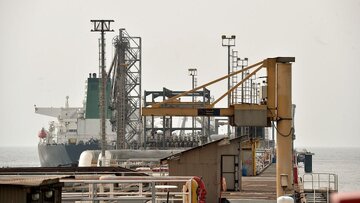
• Route Engineering: Topographic studies showed that the corridor “Oman Coast –Sirik – Sirjan – Kerman – Shahr-e Babak – Khatam – Abarkuh – Isfahan,” despite the longer distance, has a more suitable gradient for constructing pumping stations, optimizing energy consumption.
• Environmental Compliance: Due to strong oceanic currents, the Oman Sea has a high capacity for rapid brine dilution, allowing the Department of Environment to issue permits
with greater confidence than for the enclosed Persian Gulf.
Industrial Synergy: The “Sofeh Water Supply Company” Model
The realization of this mega-project required a cohesive legal structure. Accordingly, a consortium was formed under the leadership of Mobarakeh Steel Company, leading to the establishment of the project-oriented “Sofeh Water Supply Company.”
• Mobarakeh Steel Company (MSC): Major shareholder and consortium leader, responsible for financing and macro-management.
• Isfahan Steel (ESCO) & Oil Refinery: Participating to ensure production sustainability.
• Isfahan Municipality & Chamber of Commerce: Representing urban and private sector interests to preserve green spaces and prevent land subsidence.
MSC’s Strategic Role: From Finance to Steel Sheets
Mobarakeh Steel Company plays a dual role beyond investment. By activating its value chain, it has resolved the project’s main bottlenecks. Material Supply: MSC has supplied approximately 900,000 tons of slab and steel sheets required by pipe manufacturing factories. This strategic action reduced dependence on imports to zero and prevented significant foreign currency outflow.
Technology Localization: Special Grades for High-Pressure Lines
One of the outstanding technical achieve ments is the production of special steel grades.
• Grade X65: Produced according to the API 5L standard for high-pressure pipelines. The use of 15mm thick X65 sheets to manufacture 2,000 mm (2.0 m) diameter pipes for the Isfahan line demonstrates MSC’s high metallurgical capability.
• Supply Chain Activation: The massive volume of orders has revitalized downstream industries. Kosar Pipe Industry and about 7 other domestic pipe manufacturers are now operating at full capacity.
Technical Specifications of Lines
The project includes several main lines, with MSC as the primary supplier:
• Line 1 (Persian Gulf to Kerman and Yazd): Operational. Over 350,000 tons of ST52 grade steel sheets supplied.
• Line 3 (Oman Sea to Isfahan): This vital line, exceeding 1,200 km, requires over 800,000 tons of steel pipe. Nearly 400,000 tons (X65 and ST52) have already been produced and placed.
• Line 4 (Eastern Corridor - Chabahar to Mashhad): For the country’s longest axis (1,340 km), MSC has supplied about 180,000 tons of sheets in the first phase.
• Taleghan to Tehran: Supply of 96,000 tons of slab for the capital’s water supply. “The prevailing approach of the consortium and Mobarakeh Steel is the ‘replacement’ of water sources, not ‘development’ based on new water The main goal is to completely cut industries’ dependence on the Zayandeh Rud and groundwayter, dedicating local resources to restoring the environment.”
Expert Responses to Criticism
• Sustainable Development: The project focuses on “replacement,” not new industrial loading. The goal is to cut dependence on the Zayandeh Rud so local resources can restore the ecosystem.
• Economic Justification: While expensive for traditional agriculture, the estimated levelized cost of water: 3–4 €/m³ (sensitivity: ±20% based on energy price 0.05– 0.07 €/kWh and the Oman Sea salinity ~36–38 g/L) is economically viable for high-value industries like steel and petrochemicals, preventing costly production stoppages.
• Strategic Source: Changing the source to the Oman Sea offers higher security (passive defense) and unlimited withdrawal capacity compared to the saturated Persian Gulf.






نظر شما