


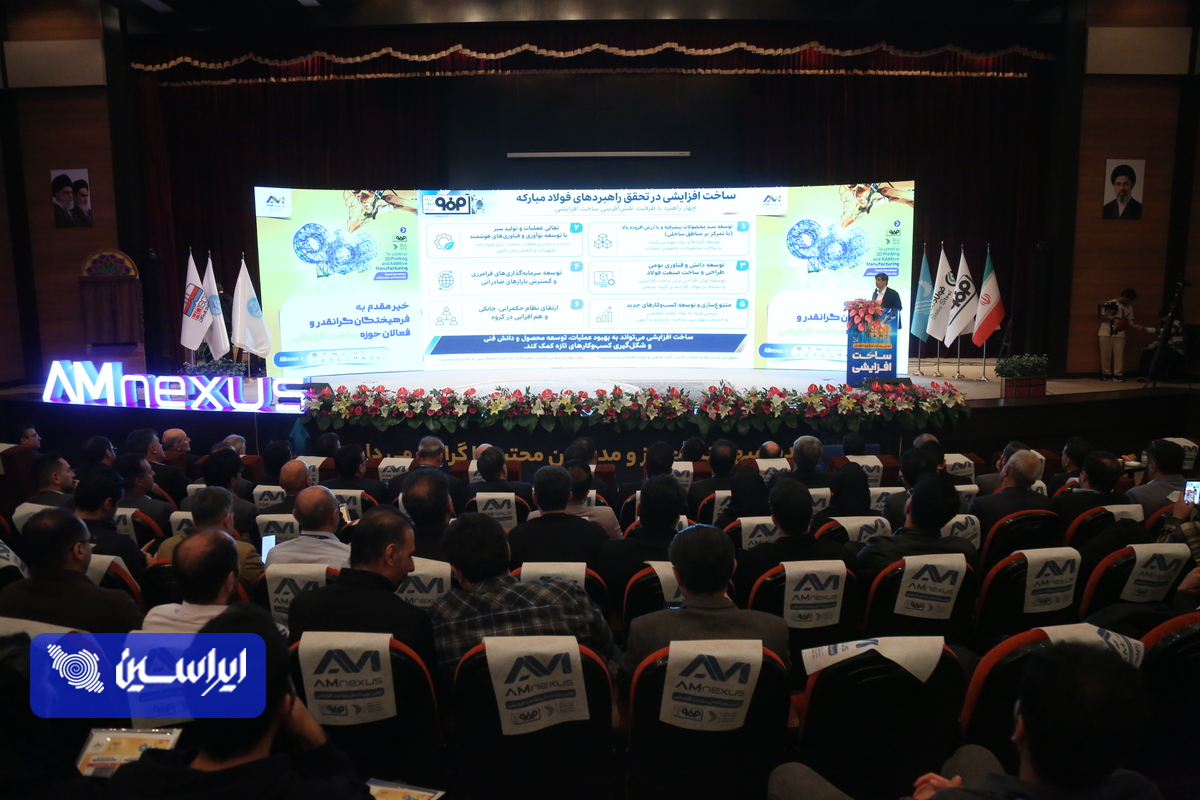
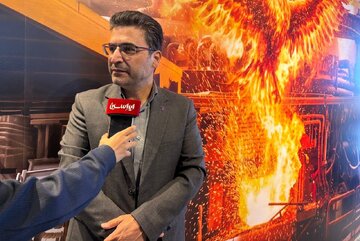
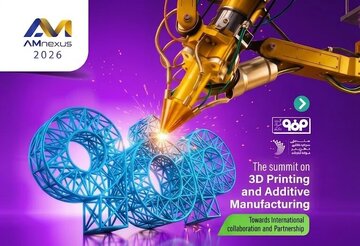
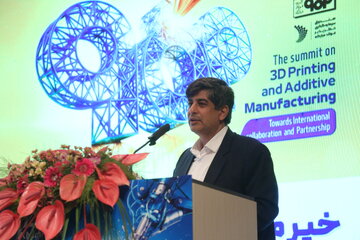
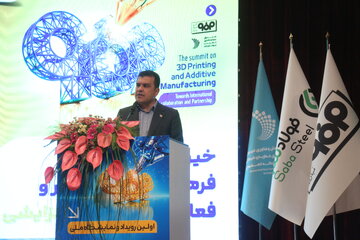
According to the analytical news outlet IRASIN, Saeed Zarandi, CEO of Mobarakeh Steel Group, outlined the group's strategic roadmap targeting the 2035 Horizon during the 1st Specialized National Gathering of the Additive Manufacturing Value Chain, organized by the University of Tehran. He stated: "Six strategic axes are pursued within this complex, among the most critical being the development of advanced, high-value-added product portfolios. We believe Mobarakeh Steel Group must move into domains where others lack entry capabilities, positioning advanced products and technologies at the core of its development plans with a distinct vision."
Noting that long-term industrial vision must not be clouded by temporary hardships and constraints, he added: "Recently, Mobarakeh Steel Group faced challenging conditions, and our colleagues navigated a tough period. Yet, even under those circumstances, we strove to maintain momentum across future plans. Alongside reconstruction efforts and continuous production, a dedicated team systematically pursued development projects and long-term enterprise goals."
Highlighting the need for major industrial enterprises to shift their approach toward technology and investment, the CEO of Mobarakeh Steel Group specified: "A core pillar of our program centers on developing specialized, advanced products, on which we have placed substantial focus. We believe Mobarakeh Steel Group should operate in spheres capable of creating higher competitive advantages and greater value addition."
Zarandi identified green production development, innovation, and smart technologies as additional strategic drivers for Mobarakeh Steel Group, noting: "Alongside these areas, we seek to transition our role from being a buyer of technology and know-how from other nations into an entity capable of offering a portion of its accumulated knowledge and operational expertise to others. Recent reconstruction experiences demonstrated once again that Mobarakeh Steel Group possesses valuable technical knowledge and operational expertise—a capacity that can become a revenue stream and an economic advantage."
He also announced plans to expand international cooperation networks and invest in complementary industries, stating: "Along this pathway, a resource allocation model has been designed under which approximately 70% of investments are directed toward core operational areas, 20% toward complementary industries and businesses, and 10% toward new emerging domains."
Three Drivers of Transformation at Mobarakeh Steel Group
Outlining three major directions in the global steel industry, the CEO of Mobarakeh Steel Group named the circular economy, digital transformation, and advanced materials development as primary drivers of the group's future programs. He remarked: "Our benchmark studies of major global steel companies show that these three domains have emerged as critical industry directions, and we are progressively aligning our structures and programs with these shifts."
Emphasizing the importance of the circular economy, he stated: "Transitioning toward a circular economy represents a serious imperative for the steel industry. The nature of requirements and commitments in this sphere is such that failing to update our operations will result in severe export constraints in coming years. Consequently, this topic has become a primary chapter in Mobarakeh Steel Group's development plans."
Zarandi identified digital transformation as the second driver, adding: "In digital transformation, we have seven major projects underway with favorable progress. Alongside these two axes, advanced materials development is another area where we have formulated plans, believing it must be pursued with greater intensity across the industry and national levels."
Pointing out that several divisions within Mobarakeh Steel Group are actively engaged in advanced steel development, he noted: "In advanced materials and related technologies, a fully cohesive, widespread movement across the national industrial landscape has yet to materialize. Therefore, we expect academia, tech companies, and major industries to collaborate in a manner that transitions this domain beyond research and conceptual stages into operational, industrial projects."
Expanding the Portfolio of High-Value-Added Products
Zarandi elaborated on Mobarakeh Steel Group's programs to supply products required by advanced industries: "Various measures are underway in high-value-added products. The electrical steel project is approaching finalization and being pursued for implementation. Furthermore, in automotive steel grades, new investments are on the agenda to manufacture higher-quality grades."
He continued: "In home appliances and packaging, we cover a significant portion of market demand while pursuing a new color-coated sheet project focused on advanced product development. Additionally, establishing the required infrastructure to manufacture products for advanced industries is being designed as a major master initiative."
Referring to plans to establish an entity titled "Future Steel," the CEO of Mobarakeh Steel Group stated: "We are designing a model to establish a multi-faceted innovation and technology complex adjacent to Mobarakeh Steel Group. This complex incorporates infrastructure such as pilot plants, academic integration, and tech company participation under a model distinct from past frameworks. The scope of this plan has matured compared to early stages, and its execution team has been appointed, aiming to serve as a national model for innovation development."
Additive Manufacturing: An Opportunity to Enter New Businesses
Citing discussions on additive manufacturing in recent specialized sessions, Zarandi remarked: "Our assessments indicate that additive manufacturing represents a domain that Mobarakeh Steel Group is fully prepared to enter once it reaches industrial readiness. Our presence at this event underscores that we do not view additive manufacturing merely as a research or academic exercise, but as an opportunity to build a new business within the future of Mobarakeh Steel Group."
Reiterating the role of large-scale enterprises in fostering novel technologies, he added: "To realize an industrial transformation, capital investment from major corporations is essential. Knowledge-based firms can play pivotal roles alongside these groups at the core of technological activities; however, moving beyond the research phase to achieve industrial-scale manufacturing requires designing large projects and executing targeted capital allocation."
Expressing Mobarakeh Steel Group's readiness to collaborate with universities and technology players in additive manufacturing, the CEO clarified: "We are actively identifying new businesses for the future of Mobarakeh Steel Group, and we believe additive manufacturing can serve as a vital pathway to achieve this goal. We expect the outcomes of such gatherings not to remain confined to scientific exchanges, but to lay the groundwork for commercial and industrial investment projects."
Pointing to global industrial benchmarks, Zarandi noted: "Reported applications of this technology in major industries demonstrate significant reductions in equipment repair and reconstruction timelines—in some instances cutting operational downtime by up to 90% while increasing produced part counts multi-fold compared to conventional methods."
Transforming Scientific Capacity into Industrial Investment
Addressing global trends in advanced materials and modern manufacturing technologies, the CEO of Mobarakeh Steel Group added: "Advanced materials represent a rapidly growing domain across global industries, demanding special attention from Iran. At Mobarakeh Steel Group, we are evaluating our market share and position in this sector, hoping to progressively enter this field by leveraging domestic scientific and industrial capacities."
Zarandi also highlighted the importance of expanding energy investments: "Mobarakeh Steel Group is pursuing rigorous programs in the energy sector, prioritizing investments in gas and electricity infrastructure despite existing challenges. In this regard, projects related to gas distribution networks and power supply arrangements are actively being advanced."
Green Steel: A Key Axis of Long-Term Planning
In another part of his address, Zarandi defined green steel as a central pillar of Mobarakeh Steel Group's future vision, stating: "We are pursuing green steel with utmost seriousness, making structural realignments within the enterprise accordingly. Annual operating plans are drafted around this approach, encompassing projects such as solar power plant expansions, resource recovery, and energy efficiency optimization."
Emphasizing the necessity of resource recovery and low-carbon technologies, he added: "We have initiated steps to secure international certifications and licenses in this field while evaluating future steel industry trends such as hydrogen utilization, Carbon Capture and Storage (CCS), and hydrogen-based Direct Reduced Iron (DRI). Naturally, adopting certain technologies must align with the country's economic, infrastructural, and technical parameters."
Concluding his address, the CEO of Mobarakeh Steel Group expressed hope that the 1st National Additive Manufacturing Exhibition would mark the beginning of broader collaborations among academia, knowledge-based firms, and major industries: "At Mobarakeh Steel Group, we rigorously pursue three drivers: digital transformation, the circular economy, and advanced materials development. We hope today's event, particularly in advanced materials and additive manufacturing, serves as a catalyst for new industrial transformation and paves the way for Mobarakeh Steel Group's entry into new industrial and investment activities."



نظر شما