


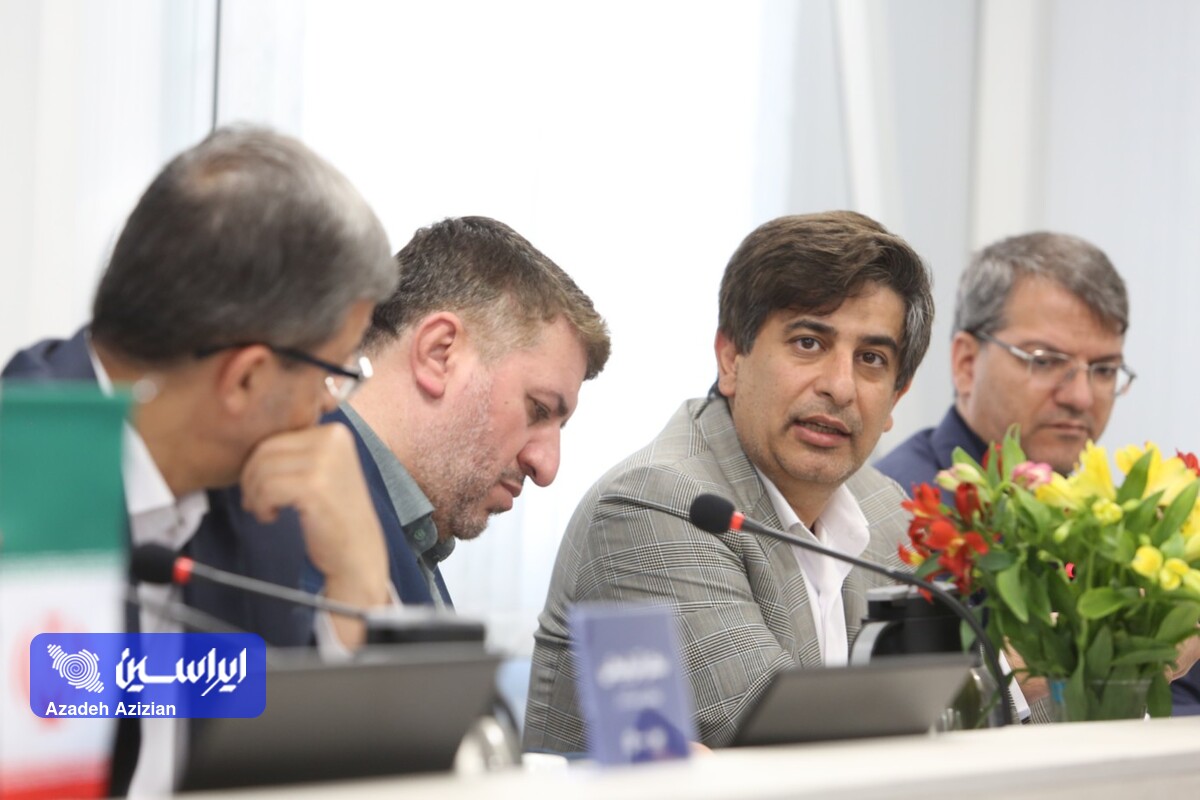
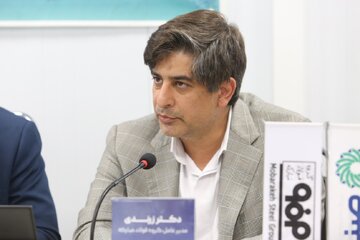
According to the analytical news outlet IRASIN, Saeed Zarandi, CEO of Mobarakeh Steel Group, detailed the group’s plans for sustainable energy supply and disconnecting from regional networks during a specialized meeting of the "Isfahan Energy Table," hosted by Sanap Energy with describing plans to ensure a steady supply of energy, with the company taking proactive steps to achieve self-reliance. He stated that alongside executing development projects for water, electricity, and gas supply infrastructure, Mobarakeh Steel Group is actively pursuing consumption management and energy intensity reduction to maintain production stability without overburdening Isfahan Province’s energy grids.
Referring to the experience of executing the Isfahan water transfer project, he noted: "Last year, through close follow-ups and the support of provincial leadership, a significant investment of approximately $1 billion—based on prices at the time of execution—was made for water transfer. This project serves as an example of measures that effectively reduce pressure on provincial resources and networks."
The CEO of Mobarakeh Steel Group added: "Continuing on this path, the development of the Madar gas field is one of the most critical priorities on our agenda. Achieving this goal will assist in meeting the energy demands of the industry while alleviating pressure on the province."
Signing of the Madar Gas Field Contract and Commencement of Operations
Highlighting the progress made regarding the Madar gas field project, Zarandi stated: "Following extensive follow-ups and overcoming numerous obstacles, this project has entered a new phase. The relevant contract was signed last week, and we anticipate that part of the operational process will begin within the next one to two weeks."
He continued: "Although not all required permits have been obtained yet, the majority of necessary authorizations to commence operations have been secured from the Ministry of Petroleum. We are striving to complete the remaining stages to advance project execution as swiftly as possible."
The CEO of Mobarakeh Steel Group emphasized: "The development of this gas field, alongside other energy supply initiatives, forms part of the group's macro-plan to ease pressure on provincial infrastructure and strengthen the sustainability of industrial operations."
Planning for the Return of Part of the 914 MW Power Plant to the Grid
Addressing Mobarakeh Steel Group's plans in the power generation sector, Zarandi said: "Prior to the damages incurred, this complex possessed a power plant with a capacity of 914 MW, featuring two operational gas units and two operational steam units. Furthermore, another steam unit had reached over 95% physical progress. However, following an aggressive attack on Mobarakeh Steel Group, this infrastructure sustained severe damage."
He added: "An intensive planning schedule is now underway to restore a portion of this capacity back online. Our target is to bring at least one gas unit and one steam unit into service before the peak power consumption period next year."
Pointing to the technical and operational complexities of rebuilding the power plant, the CEO of Mobarakeh Steel Group clarified: "A portion of the required equipment is dependent on foreign sources. Acquiring these under sanctions presents challenges due to import restrictions, foreign currency requirements, and equipment transport logistics. Nevertheless, by focusing on cooperation with MAPNA Group, we are striving to revitalize part of our power generation capacity in the shortest possible time frame."
Zarandi continued: "Under current plans, the objective is to make approximately 500 MW from this power plant complex ready for commissioning in the coming period. Given current conditions, we anticipate part of this capacity will return to the grid by April or May of next year. Fulfilling this plan will aid in completing the steam section and restoring part of the gas capacity."
He also announced the return of part of another Mobarakeh Steel Group power plant capacity to the grid, stating: "The complex's older power plant, which was named after the martyr Bahrami following his martyrdom, currently has nearly 200 MW of its capacity connected back to the grid."
The CEO of Mobarakeh Steel Group added: "Utilizing existing capabilities and restoring damaged units back into the power generation cycle, alongside launching new projects, constitute the primary pillars of our plan to achieve sustainable energy supply and reduce dependency on the national grid."
Solar Power Plant Expansion: From 120 MW Operation to Alternative Plans
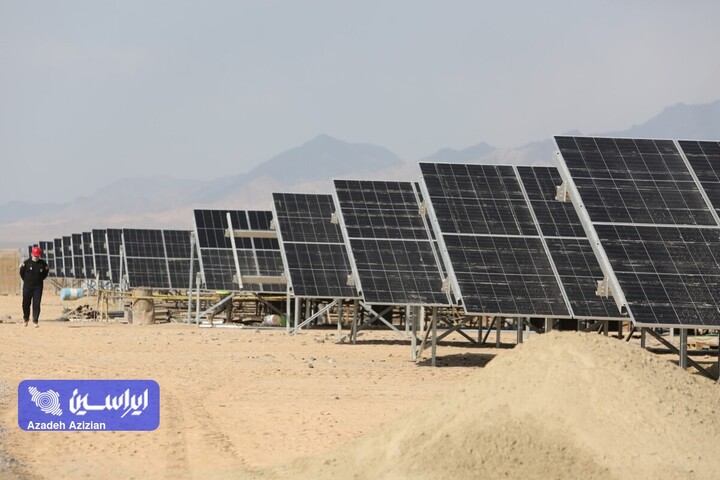
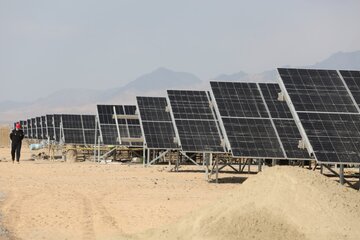
Detailing Mobarakeh Steel Group’s plans for renewable energy development, Zarandi noted: "Numerous actions have also been taken in the solar power sector. The first phase of this project, with a capacity of 120 MW, was commissioned last year, and equipment for the second phase of equal capacity has largely been procured. However, challenges related to structure supply and sanctions-related restrictions have delayed the execution of the second phase."
Explaining the difficulties in importing required equipment, he said: "Since December of last year, the country’s import processes faced disruptions, prioritizing essential goods in allocation and entry. Consequently, starting in February/March, parts of the import process for project equipment encountered issues, even though payments had already been cleared for some equipment."
The CEO of Mobarakeh Steel Group continued: "A portion of the equipment required for the second phase is currently located inside the plant, another part is at customs, while moving remaining items into the country proved unfeasible due to large dimensions and logistical constraints. Transporting this equipment by rail was also evaluated, but high costs and priority constraints in rail transport made execution difficult."
Pointing to alternative solutions to prevent stalling Mobarakeh Steel Group’s solar capacity expansion, Zarandi stated: "Parallel to pursuing the primary contract, leveraging MAPNA Group's capacity on a bailment/consignment basis has been put on the agenda. This method involves structural design modifications and shifting toward fixed mounts, enabling us to commission a portion of the targeted capacity faster, independent of supply obstacles."
He added: "This parallel initiative is being pursued through Sanap Energy. According to our timeline, we hope approximately 20 MW of this capacity will be ready for delivery and grid connection within the next month. Additionally, preparations for another 60 MW are on the agenda."
The CEO of Mobarakeh Steel Group stressed: "The goal of this parallel track is to accelerate solar power expansion and mitigate import barriers on our power supply plans, ensuring that new capacities gradually come online alongside the completion of the main project's second phase."
Highlighting additional opportunities to boost power generation capacity, Zarandi said: "Utilizing the capacity of the Islamabad Power Plant is also on our agenda. With a capacity of 300 MW and necessary water infrastructure in place, this power plant can play an active role in meeting electricity needs and relieving pressure on the provincial grid."
He added: "Capitalizing on existing power generation facilities alongside developing dedicated power plants are key pathways toward reinforcing industrial energy security and improving power supply stability."
Completion of Semnan Power Plant and Commissioning of Samirom Solar Plant
Detailing Mobarakeh Steel Group’s projects outside Isfahan Province, the CEO stated: "Completing the Semnan Power Plant is among our planned objectives for the current year. This complex holds approximately 300 MW of generation capacity, of which around 200 MW was previously allocated to Isfahan to supply Mobarakeh Steel Group’s needs. In the solar sector, the Samirom plant is included in our development program, with its 10 MW capacity expected to join the grid this year."
Stating that these actions are being pursued alongside gas field projects, thermal power plants, and solar initiatives, he emphasized: "Mobarakeh Steel Group's strategy does not solely focus on expanding energy generation capacity; consumption management, process optimization, and reducing energy intensity are equally integral to our overarching strategy."
Focus on Artificial Intelligence and Reducing Energy Intensity
Emphasizing the necessity of managing energy consumption alongside expanding supply, Zarandi said: "Simultaneously with implementing new projects to increase energy supply, Mobarakeh Steel Group is pursuing multiple initiatives to lower costs and reduce energy intensity. A portion of these efforts yielded favorable results last year, and optimization projects are being pursued with even greater vigor this year."
He added: "Along this path, artificial intelligence and machine learning models have been utilized to optimize consumption and improve process performance, bringing valuable achievements."
Reflecting on national energy consumption, the CEO of Mobarakeh Steel Group noted: "A critical challenge for Iranian industry is the need for a stronger focus on reducing energy intensity. National energy consumption remains high compared to many countries; if consumption management is not effectively executed alongside capacity expansion, efforts to boost production capacity will be undermined."
Zarandi stressed: "Infrastructure development and consumption pattern reform must proceed simultaneously, as production sustainability cannot be achieved by merely increasing supply. Efficient resource utilization and optimization are of fundamental importance."
Rising Costs of Purchasing Power from the Energy Exchange
Addressing rising electricity procurement costs and their impact on Mobarakeh Steel Group’s operations, Zarandi said: "The complex has strived to support provincial programs as much as possible and minimize pressure on the power grid through self-generation projects. However, in practice, grid power supply has faced restrictions at various points."
He added: "Under planned arrangements, the Ministry of Energy was expected to guarantee Mobarakeh Steel Group access to the power grid at a 20% level, but this encountered issues in certain instances. On the other hand, energy procurement costs have surged dramatically, placing an added strain on an organization simultaneously engaged in rebuilding and restoring its production capacity."
Pointing to power price fluctuations on the Energy Exchange, the CEO of Mobarakeh Steel Group stated: "Last year, the average price for purchasing electricity from the exchange ranged between 3,000 to 4,000 Tomans, whereas power is currently being procured at approximately 20,000 Tomans. This cost increase comes at a time when Mobarakeh Steel Group has experienced heavy damages and continues to face infrastructure reconstruction expenses and hurdles."
Zarandi continued: "Under these circumstances, policy directions have shifted toward placing greater emphasis on green power resources and procuring electricity via Energy Exchange channels. Although developing these capacities is essential for long-term energy stability, substantial cost increases impose greater financial pressure on the industry."
He highlighted Mobarakeh Steel Group’s target for major energy self-sufficiency, stating: "Our plan is to supply approximately 80% of our required electricity through self-generation capacities and multi-faceted projects. Consequently, we are focusing all efforts on accelerating power plant, solar, and energy-related projects to diminish reliance on the national grid."
Necessity of Sustainable Gas Supply During the Cold Season
In another segment of his remarks, the CEO of Mobarakeh Steel Group addressed gas supply during cold months, stating: "Alongside power supply initiatives, gas procurement is of paramount importance. In this regard, contracts regarding flare gas utilization are being finalized, and alternative options to bolster gas supply sources are under review."
Underlining the necessity of synchronizing infrastructure reconstruction with energy supply for restarting production lines, Zarandi noted: "Mobarakeh Steel Group’s reconstruction process is progressing steadily, and we are working to bring damaged capacities back into the operational cycle as quickly as possible. However, without the required infrastructure for power, water, and gas, operating restored capacity will face significant constraints and operational concerns."
He added: "Ramping production units back up and maximizing industrial capacity requires matching energy supply with the line restart schedule. Therefore, energy matters must be pursued in tandem with the reconstruction process and aligned with future operational needs."
In conclusion, Zarandi expressed gratitude for the support of the Governor of Isfahan and provincial management, saying: "In executing water, power, and gas supply initiatives as well as self-generation capacity development, Mobarakeh Steel Group has sought to act as a supportive partner to the province and relieve pressure on public infrastructure. We expect that with continued support from the Governor and leadership team, sustainable energy supply will progress in tandem with Mobarakeh Steel Group’s reconstruction, enabling full plant startup and maximum production capacity usage upon complete restoration."
The CEO of Mobarakeh Steel Group concluded: "The ultimate objective is completing the reconstruction process and returning production capacities to the operational cycle—a goal that requires timely supply of water, electricity, and gas, alongside effective inter-agency coordination, in addition to internal efforts and new project execution."
نظر شما