


Iran stands as a formidable player in the global steel industry, with a vibrant and growing steel manufacturing sector that has played an integral role in the country’s industrialization and economic development. The nation boasts a diverse array of steel producers, ranked among the most important in the Middle East and North Africa (MENA) region, and its largest steel company, Mobarakeh Steel Group, ranks among the world’s top steelmakers, underscoring Iran’s significant position in global markets.
Historical Roots and Formation of Steel Industry in Iran
The roots of Iran’s steel industry date back to the early 20th century when the government made initial attempts to meet the country’s infrastructural needs, including railway construction. The first serious plans for steel production began in the late 1920s, followed by incremental development until World War II disrupted progress. The first steel mill in Khuzestan was established in 1950 for processing scrap iron but was significantly hampered by the war and subsequent economic challenges.
A pivotal moment came in the 1960s when a collaboration with Soviet experts and export revenues from natural gas paved the way for establishing a large-scale steel plant. The Esfahan Steel Company (also known as Zob Ahan), established in Isfahan in 1965, marked the true industrial birth of modern steel production in Iran. With an initial annual production target of half a million tons, the plant served national industries such as army, railways, and automobile manufacturing, setting the foundation for a nationwide steel sector expansion.
Diversity and Expansion of Steel Producers in Iran
Today, Iran hosts numerous steel plants fulfilling domestic demand and increasingly targeting exports. The steel production capacity of Iran reached an estimated 55 million tonnes by early 2025, positioning it as the 10th largest steel producer globally. Despite challenges such as international sanctions and geopolitical tensions, the sector’s resilience has been remarkable, supported by continuous investment and technological upgrades.
Among Iran’s key steel companies are:
Mobarakeh Steel Company (MSC): The largest steel producer in Iran and the MENA region.
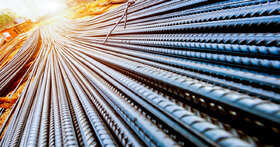
Esfahan Steel Company (ESCO): The oldest steel producer in Iran, specializing in long products like rebar and construction steel.
Khouzestan Steel Company (KSC): Known for semi-finished steel production with a leading export role.
Khorasan Steel Complex: The eastern region’s largest steelmaker, notable for advanced technology and quality products.
These companies reflect Iran’s industrial diversity, meeting construction, automotive, and manufacturing needs domestically and increasingly exporting to international markets.
Mobarakeh Steel Group: The Regional Giant and Global Player
Among Iranian steel producers, the Mobarakeh Steel Group stands out as a titan in the regional and international steel landscape. Commissioned after the 1979 revolution and operational from 1993, Mobarakeh has continuously expanded and modernized its facilities. It is the largest steel complex in the Middle East and North Africa, as well as the world’s largest direct reduced iron (DRI) producer.
Mobarakeh’s 2024 production surpassed 10 million tons, ranking it 43rd in the global list of top steel producers. This production volume surpasses any other Iranian steelmaker and places Mobarakeh among the elite global players. The company generates multi-billion-dollar annual revenues, directly employs over 14,000 people, and holds a substantial role in strengthening Iran’s industrial infrastructure and export capabilities.
Mobarakeh is also known for its robust forward and backward integration in steelmaking and mining operations, owning mines, power plants, and even a gas field to secure supply chain stability. The company’s leadership in electric arc furnace (EAF) steelmaking is particularly notable on the world stage.
Unique Electric Arc Furnace Capacity
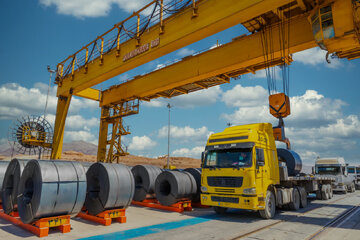
One of Mobarakeh Steel’s distinguishing technological features is its array of eight electric arc furnaces (EAFs) under one roof, making it the largest steelmaker with this density of EAF equipment in the world. This reflects a high degree of industrial concentration and operational scale, allowing efficient production of high-quality steel sheets and coils used in automotive and manufacturing sectors.
EAF technology is recognized for its operational flexibility and environmental advantages, as it primarily uses scrap steel and DRI inputs with lower carbon emissions compared to traditional blast furnaces. Mobarakeh’s adoption and pioneering scale of EAF technology put it at the forefront of steel innovation with strategic implications for sustainable production in the region.
Importance in Regional and Global Markets
Mobarakeh Steel’s influence extends well beyond Iran. It is the apex steel producer in the MENA region, shaping supply chains across the Middle East and North Africa. Its production capacity supports critical infrastructure projects and automotive manufacturers across these regions and forms part of the strategic resource base underpinning industrial development.
Iran’s steel industry as a whole plays a vital role in the country’s economic self-sufficiency and regional competitiveness. The sector has rebounded from decades of sanctions through investment in technology and human capital, steadily growing steel production output despite global market fluctuations. Iran’s steel industry are spotlighted for their combination of large scale, advanced technology, and strategic regional importance.
نظر شما