


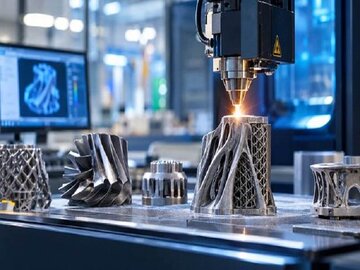
According to the analytical news outlet IRASIN, in the modern industrial economy, competitive advantage is no longer measured solely by the tonnage of molten metal poured into furnaces; rather, it lies in the speed of converting digital data into complex components and mastering "advanced materials." The global additive manufacturing market—having expanded by 10.9% to reach $24.2 billion—has fundamentally transformed a century-old logic built on subtractive, tooling-dependent, and inventory-heavy manufacturing. The 1st National Additive Manufacturing Exhibition (AMnexus 2026), organized by the University of Tehran with pivotal leadership from Mobarakeh Steel Group, demonstrated that the industrial holding views this technology not as a showcase project, but as the core engine driving future businesses and a lever to redefine industry ground rules toward the 2035 Horizon.
Transitioning from Technology Buyer to Architect of "Future Steel"
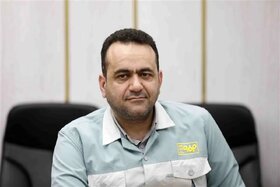
In outlining the strategic roadmap targeting the 2035 Horizon, Saeed Zarandi, CEO of Mobarakeh Steel Group, built the Group's strategy on the classic principle of differentiation: advancing toward specialized products and high technologies that conventional competitors have limited access to. From Zarandi's perspective, the Group's resilience during recent difficult reconstruction periods proved that the accumulated technical knowledge within Mobarakeh Steel Group is a strategic asset. Consequently, the Group is actively shifting its position from a buyer of technology to a supplier of know-how and technical licenses, generating new revenue streams.
The financial architecture of this strategic shift relies on a 70-20-10 resource allocation model: allocating 70% of capital to core operations, 20% to complementary industries, and 10% to emerging domains at the technological edge. Within this framework, aligned with global steel giants, three primary drivers guide the Group's investments:
- Circular Economy and Green Steel: Executing solar power plant expansions, resource recovery projects, Carbon Capture and Storage (CCS), and evaluating hydrogen-based Direct Reduced Iron (DRI) to preserve export markets against stringent carbon regulations.
- Digital Transformation: Advancing seven major digital initiatives to smarten the production chain.
- Advanced Materials Development: Finalizing electrical steel projects, advanced automotive grades, a new color-coated sheet initiative, and targeted entry into the additive manufacturing chain.
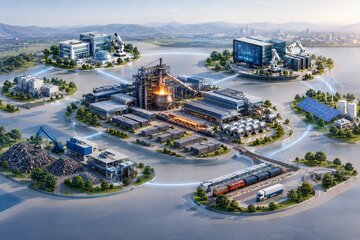
The institutional manifestation of this strategy is the design of the "Future Steel" technology and innovation complex adjacent to Mobarakeh Steel Group—a multidisciplinary hub comprising pilot plants, university partnerships, and tech enterprise participation to bridge the gap between laboratory concepts and industrial-scale manufacturing.
The Vital Imperative of Additive Manufacturing for Domestic Industry and Mobarakeh Steel Group
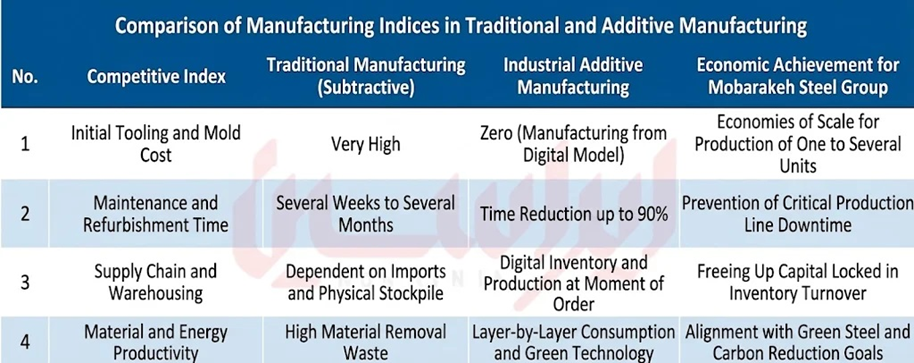
Why is additive manufacturing a security and economic imperative for Iran's industrial economy? In continuous process industries such as steel, automotive manufacturing, and refining, a production line shutdown caused by the lack of a single imported component inflicts severe financial losses. Under sanctions, procuring metal powders and complex components from abroad can take up to six months while imposing hefty foreign exchange expenditures.
By eliminating tooling requirements, enabling direct production from digital files, and localizing complex geometries, additive manufacturing minimizes supply chain risks. As noted by the CEO of Mobarakeh Steel Group, industrial benchmarks demonstrate that deploying this technology reduces equipment maintenance, repair, and overhaul (MRO) timelines by up to 90% while increasing produced part counts severalfold compared with conventional methods.
Vertical Integration Within Mobarakeh Steel Group
The key differentiator for Mobarakeh Steel Group at AMnexus 2026 was its ecosystem-driven approach and comprehensive coverage of the additive manufacturing value chain—spanning from raw materials to venture capital and industrial end-markets. As Hossein Afshin, Vice President for Science, Technology and Knowledge-Based Economy, emphasized, Mobarakeh Steel Group and its venture fund do not act merely as component buyers; they have evolved into investors, industrial testers, and technology market developers:
Mobarakeh Steel Complex (Central Repair Shop and Localization Unit): By presenting actual production line bottlenecks through Reverse Pitch initiatives, it provides a guaranteed market and real-world industrial testing environments for knowledge-based enterprises.1
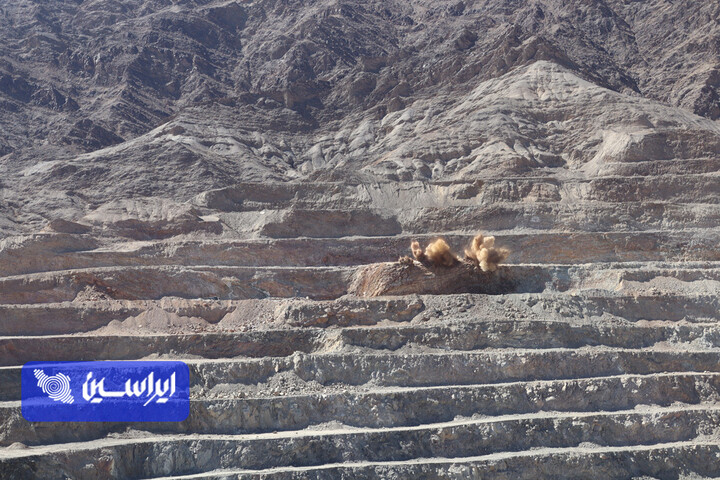
Saba Steel & Rolling Company (Metallurgical Driver and Raw Material Provider): Having expanded its portfolio from 5 to over 100 specialized grades (ranging from API X70 and automotive dual-phase sheets to 409L stainless steel), Saba Steel & Rolling Company now targets the nation's missing.2 link: domestic production of additive manufacturing raw materials. Metal powder production requires three stages: melting, secondary metallurgy, and atomization. Possessing the first two infrastructural stages, Saba Steel & Rolling Company is adding atomization technologies (such as VIGA and EIGA) to enter the manufacturing of stainless steel powders, superalloy powders, and homogeneous ingots for domestic and export markets.
MSTID Fund: Because manufacturing companies must remain focused on tonnage output and operational stability, the MSTID Fund absorbs the high risks of R&D and technology acquisition. Investing in two companies producing superalloy wire and rod feedstocks (for WAAM processes),.3 establishing technology management systems at Saba Steel & Rolling Company, and connecting 3D printing equipment manufacturers directly to Group production lines are all spearheaded by this financial-technological arm.
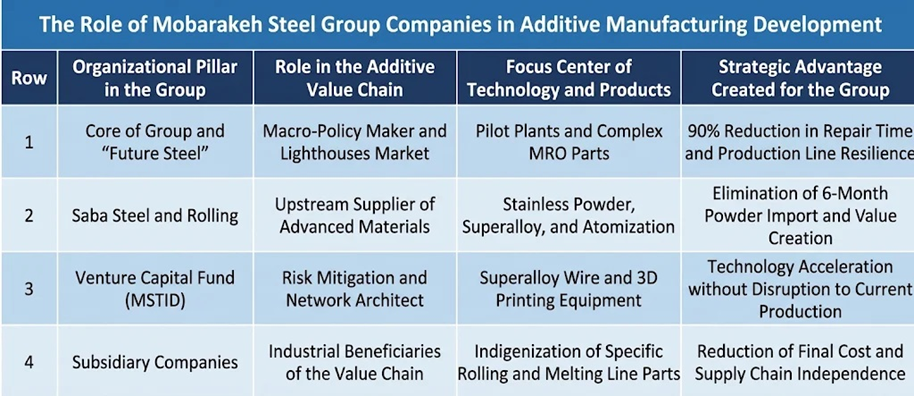
The synergy between strategic vision at the holding level, metallurgical infrastructure at Saba Steel & Rolling Company, and investment agility at the MSTID Fund positions Mobarakeh Steel Group to permanently resolve its critical component supply bottlenecks. Furthermore, it paves the way for the Group to emerge as a regional hub for advanced materials and metal powders—shifting competitive boundaries from raw steel tonnage to the knowledge-based economy of future steel.

نظر شما