


According to the analytical news outlet IRASIN, developing modern production technologies and moving toward the creation of complex, customized, and high-value-added products has become an imperative for transforming steel industries. In this landscape, additive manufacturing and metal 3D printing technologies have opened up fresh horizons for the steel sector by enabling the production of complex components, reducing raw material waste, eliminating certain tooling costs, and lowering spare parts inventory requirements.
Despite the broad capacities of this technology, securing raw materials—specifically metal powders utilized in 3D printing—remains a vital link for its domestic development. From this perspective, leveraging the capabilities of steel companies alongside venture capital and technology development capacities can lay the foundation for establishing a domestic additive manufacturing value chain.
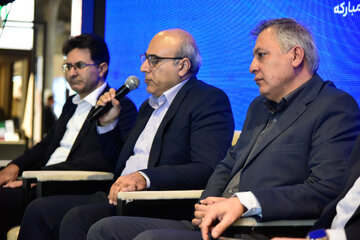
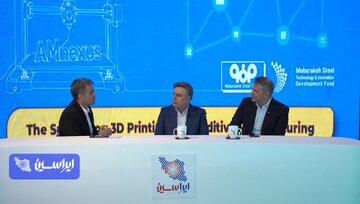
To explore these dimensions, IRASIN hosted a specialized roundtable titled "Additive Manufacturing," featuring Arash Hajipour, Technology Manager at Saba Steel & Rolling Company, and Mohammadreza Momtaz, Investment and Corporate Governance Deputy at the MSTID Fund. The session examined the technical, economic, and investment aspects of this technology alongside opportunities awaiting the nation's steel industry.
From Product Portfolio Expansion to Entering Additive Manufacturing
Arash Hajipour, Technology Manager at Saba Steel & Rolling Company, outlined the company's approach to technology development and strategic product manufacturing: "Saba Steel & Rolling Company has pursued a clear strategy over past years, dictating that whenever the country faces constraints in securing required steel products—or when manufacturing them enhances public welfare, boosts safety, and reduces fuel consumption—entering that domain is prioritized. This approach gains heightened significance during sanctions and foreign supply limitations, as self-sufficiency in strategic product manufacturing stands as an industrial imperative."
He added: "Within this framework, Saba Steel & Rolling Company initiated its product portfolio development program around seven years ago, successfully expanding its manufactured grades from 5 to over 100. Continuing this trajectory, by identifying downstream industry needs and raw material and advanced product sourcing challenges, new domains for technology development and manufacturing were identified."
Highlighting downstream challenges in procuring advanced materials, the Technology Manager at Saba Steel & Rolling Company stated: "Superalloys, stainless steel, and metal powders required by 3D printers represent products facing various access, pricing, and import lead-time constraints. In some instances, procuring the powder required for 3D printing equipment can take roughly six months alongside substantial costs."
Hajipour continued: "Evaluating these needs led us to study and assess additive manufacturing technology capacities. On the other hand, Mobarakeh Steel Group established a venture capital structure through the MSTID Fund, providing a favorable platform to identify and support technological projects. Accordingly, Saba Steel & Rolling Company, in collaboration with the MSTID Fund, initiated joint studies and assessments in this sphere."
Additive Manufacturing: Shifting from Mass Production to Customization
Outlining the economic advantages of additive manufacturing over conventional industrial component production methods, he stated: "Global technology development trends are shifting away from producing raw materials in sheet or slab form followed by multiple shaping, machining, and finishing steps toward manufacturing final products directly via 3D printing."
Saba Steel & Rolling Company's Technology Manager asserted: "Traditional manufacturing methods—particularly for complex parts—require multiple production and finishing stages, frequently generating significant raw material waste. Conversely, 3D printing enables the fabrication of complex components with high precision, speed, and exact alignment with end-customer specifications."
Emphasizing the economic advantages of this technology, Hajipour added: "In conventional methods, producing components in limited runs may prove economically unviable due to high tooling design and fabrication costs, as producers must manufacture a specific volume to offset initial tooling and setup expenses. However, additive manufacturing permits the fabrication of even a single unit or limited batches, allowing producers to design and manufacture products tailored to customer orders."
He cited raw material waste reduction, lower production costs, the elimination or reduction of tooling requirements, and minimized warehousing expenses as additional benefits: "Under this approach, maintaining large inventories of spare parts to address potential demands is unnecessary; instead, required components can be manufactured upon order placement. This characteristic yields significant economic advantages, particularly for specialized, low-consumption industrial components."
Saba Steel & Rolling Company's Capacity to Enter Metal Powder Production
Addressing the necessity of focusing on raw material procurement for 3D printing technology, Hajipour noted: "Although various global firms have entered equipment and 3D printer manufacturing, expandable capacities remain within the metal powder production segment. Consequently, our focus centered on evaluating the feasibility of domestic raw material production."
Detailing the core stages of metal powder manufacturing, he explained: "This process divides into several principal phases: raw material preparation and alloy formulation, melting and liquid refining, and finally converting the molten metal into powder via atomization. Each phase demands specialized equipment and technical know-how, requiring strict, controlled execution to achieve optimal powder quality."
Highlighting existing infrastructure at the company, the Technology Manager stated: "Saba Steel & Rolling Company currently possesses the equipment required for melting and liquid refining. Part of this capability relates to secondary metallurgy equipment utilized for processes such as degassing and carbon reduction."
He continued: "Regarding melting operations, the company possesses the capability to manufacture stainless steel and even advanced grades without encountering specific limitations. Therefore, should we establish the equipment required for atomization—converting molten metal into powder—in cooperation and with the support of the MSTID Fund, the foundation for entering 3D printing metal powder production will be established."
The MSTID Fund: Bridging Venture Capital and Technical Know-How
Mohammadreza Momtaz, Investment and Corporate Governance Deputy at the MSTID Fund, outlined the fund's mission in advanced technology development: "The MSTID Fund was established to assist Mobarakeh Steel Group in acquiring complex technologies and mastering them. The fund strives to foster intra-group synergy and leverage tech company capabilities to streamline pathways to technologies demanding specialized capital investment and risk acceptance."
He added: "The fundamental nature of venture capital operations differs from the missions and operational strategies of major manufacturing enterprises. Industrial firms typically cannot dedicate their entire capacity and structure to venture capital activities, as such investments inherently involve risk. The MSTID Fund was formed precisely to absorb and manage these risks, providing a platform for Mobarakeh Steel Group to enter emerging technology domains."
Describing the fund's mechanism for entering technological projects, Momtaz noted: "When addressing Mobarakeh Steel Group's technological needs—including additive manufacturing—we first conduct comprehensive studies to determine national and industrial standing. At this stage, we evaluate our technological maturity alongside teams and companies already operating in the space."
The MSTID Fund Deputy continued: "Following actor identification and capability assessments, we select optimal teams based on technical parameters, technological maturity, and infrastructure readiness, deploying Mobarakeh Steel Group's capital within these entities. Subsequently, via acceleration processes, we elevate these teams' maturity levels to advance technology development toward industrial implementation."
Synergizing Steel Technical Knowledge with Tech Company Capabilities
Emphasizing the necessity of merging steel industry technical expertise with tech company capabilities to develop additive manufacturing, Momtaz stated: "This domain requires a combination of steel industry technical knowledge and the experience of firms operating in additive manufacturing. A substantial portion of the required technical know-how resides within Mobarakeh Steel Group—particularly Saba Steel & Rolling Company—which we must guide toward advanced technology development and industrial application."
Outlining the two core pillars of the additive manufacturing value chain, Momtaz added: "This technology relies on two foundational components: first, raw materials; second, equipment and technologies converting raw materials into final products. Raw materials take the form of powders or metal wire, each transformed into targeted components within 3D printers via specialized equipment and processes."
He specified: "Developing this technology requires building connectivity and synergy between raw material producers and equipment manufacturers. The MSTID Fund serves as an intermediary and facilitator, linking capacities across both segments. Through this collaboration, mirroring our achievements in other industrial domains, we can elevate the nation's standing in additive manufacturing and approach technological frontiers."
Evaluating the country's current standing in additive manufacturing, the MSTID Fund Deputy observed: "Domestic strides have been made in equipment manufacturing and applying additive manufacturing knowledge. Although not yet at the advanced tier of this technology, progress was initiated in a timely manner, with emerging domestic enterprises."
He continued: "Nevertheless, severe vulnerabilities persist upstream in raw material manufacturing, with the majority of required raw materials supplied via imports. This occurs while domestic technical know-how and technological capacities enable the development of domestic production capabilities."
Emphasizing localization and customization of equipment required by the steel industry, Momtaz noted: "Upstream equipment fabrication remains limited domestically, necessitating the customization of technologies to align with actual steel industry requirements. Merely manufacturing a piece of equipment does not fulfill industrial needs; rather, we must identify which Mobarakeh Steel Group components are suitable for additive manufacturing and determine the economic advantages of deploying this method over conventional production."
Choosing Between Additive Manufacturing and Conventional Methods
Detailing differences between additive manufacturing and traditional component production, Momtaz explained: "In conventional methods, component fabrication typically combines casting and machining processes: raw material is produced in specific dimensions, and subsequent material removal yields the final shape. This approach falls under subtractive manufacturing."
Momtaz added: "Conversely, in additive manufacturing, production initiates from a base or initial component, with materials deposited layer by layer to form the final part. Thus, the fundamental distinction lies in how raw materials transform into final products—one via material removal, the other via controlled material addition."
He emphasized: "To effectively deploy this technology across Mobarakeh Steel Group, we must identify actual requirements and determine which component production runs are technically and economically viable via additive manufacturing. Selecting between additive manufacturing and conventional methods must be governed by component geometry, design complexity, material consumption rates, production costs, and operational industrial needs."
Atomization: Saba Steel & Rolling Company’s Completing Link for Metal Powder Production
Arash Hajipour, Technology Manager at Saba Steel & Rolling Company, detailed existing capacities to enter metal powder production: "As noted earlier, metal powder manufacturing requires three core stages: melting, liquid refining, and atomization. Currently, the first two stages—melting and liquid refining via secondary metallurgy—exist at Saba Steel & Rolling Company, leaving atomization equipment as the completing link."
Highlighting the collaboration between Saba Steel & Rolling Company and the MSTID Fund, he added: "Alongside the metal powder project, another collaborative initiative with the MSTID Fund focuses on establishing a technology management system. This framework assists us in identifying viable technologies and determining optimal acquisition pathways tailored to targeted products."
Explaining the function of the technology management system, the Technology Manager stated: "Under this framework, various technologies enabling targeted production are first identified and evaluated. Subsequently, optimal acquisition pathways—such as localization, R&D, or technology and equipment procurement—are formulated for each technology."
Hajipour continued: "For instance, regarding atomization, diverse existing technologies must be evaluated to identify optimal methods and acquisition pathways. We have defined this initiative within the technology management framework in cooperation with our colleagues at the MSTID Fund, advancing systematically. Consequently, technology selection and acquisition decisions proceed via a structured, analytical process."
Superalloy Powder Production: The Next Technology Horizon at Saba Steel & Rolling Company
Emphasizing that stainless steel powder manufacturing represents merely an initial stepping stone, Hajipour announced plans to enter superalloy powders: "We view stainless steel powder manufacturing as a starting point; however, a broader long-term horizon exists, encompassing superalloy powder production—a domestic domain currently facing capacity limitations."
Saba Steel & Rolling Company's Technology Manager added: "By selecting appropriate technical methods and sourcing required raw materials—such as superalloy wires or rods—from domestic or international suppliers, completing the superalloy powder production process is entirely feasible. Thus, alongside stainless steel powders, superalloy powder manufacturing capacity development features within our planning horizon."
Concluding his remarks, Hajipour evaluated cooperation with the MSTID Fund: "The trajectory initiated with the MSTID Fund is positive and promising. Valuable development capacities have materialized across both the metal powder project and other jointly pursued technological initiatives."
He asserted: "In my view, the establishment of the MSTID Fund has unlocked a vital capacity for Mobarakeh Steel Group. Effective utilization enables us to secure technologies whose independent acquisition would prove extremely arduous and time-consuming for manufacturing firms. Cooperation shortens the path to complex technologies, accelerating the development of technological capabilities across Mobarakeh Steel Group."
Completing the Additive Manufacturing Value Chain: From Raw Materials to Technology Development
Mohammadreza Momtaz, Investment and Corporate Governance Deputy at the MSTID Fund, highlighted Mobarakeh Steel Group's capacities to develop the additive manufacturing value chain: "A major portion of upstream infrastructure resides within Mobarakeh Steel Group. For instance, technologies associated with melting and producing clean, high-purity liquid metal are established at Saba Steel & Rolling Company, which possesses the requisite technical competence."
He added: "Upstream in wire manufacturing, the MSTID Fund has invested in two companies to develop required capacities, including superalloy wire and rod production. This proves vital, as superalloy wire serves as a primary raw material feedstock for additive manufacturing alongside metal powders."
The MSTID Fund Deputy continued: "Additive manufacturing permits either approach, and hybrid utilization is feasible depending on product requirements. Following technical and economic evaluations and method selection, we must advance toward developing downstream technologies and equipment required for execution."
He emphasized: "Mobarakeh Steel Group requires collaboration and synergy across all phases—from raw material procurement to additive manufacturing technology and equipment development. The MSTID Fund stands alongside group companies across all stages to absorb technological development risks and facilitate acquisition pathways."
The MSTID Fund: Absorbing Technology Risk to Focus Manufacturers on Production
Momtaz defined the contrasting missions of manufacturing companies and the MSTID Fund: "The core mission of Mobarakeh Steel Group enterprises is manufacturing, and companies naturally lack the time and capacity to absorb high technology development risks, as complex technological projects demand sustained time, financial resources, and the management of multiple uncertainties."
He asserted: "The founding philosophy of the MSTID Fund addresses this exact gap. The fund strives to manage technological risks, forge linkages between manufacturing firms and knowledge-based entities, and streamline technology development, enabling manufacturing companies to focus securely on their primary production mission."
Momtaz concluded: "The MSTID Fund assumes responsibility for tracking and managing technological and investment dimensions, alleviating manufacturing burdens and leveraging existing capacities to drive Mobarakeh Steel Group's mastery of additive manufacturing."










نظر شما