


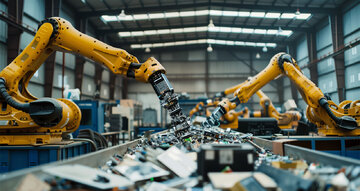
According to the analytical news outlet IRASIN, the energy transition, alongside rising demand for critical minerals, is gradually creating a new supply source for these materials. Retired batteries, decommissioned solar panels, end-of-life wind turbine blades, and legacy power grid equipment—previously regarded primarily as waste—are now becoming valuable reserves of copper, lithium, silver, silicon, aluminum, and other raw materials. Advances in recycling technologies are making it possible to recover larger volumes of these materials and return them to the manufacturing supply chain.
According to a report by Reuters, the growing significance of this trend stems from the fact that clean energy technologies require significantly more minerals than traditional energy systems. The International Energy Agency (IEA) has projected that demand for minerals vital to the energy transition will surge in the coming years. At the same time, developing new mines, constructing processing facilities, and building related infrastructure remain time-consuming processes. Consequently, recovering materials embedded in decommissioned equipment can serve as a vital complementary source of raw materials.
Batteries: A New Source of Lithium, Nickel, and Cobalt
The battery industry represents one of the clearest examples of this shifting approach toward retired equipment. In previous years, the battery supply chain focused primarily on securing mined lithium, nickel, cobalt, and graphite. However, as the volume of spent batteries increases, material recovery has gained heightened importance.
American company Redwood Materials announced that it recovers over 95% of the lithium, nickel, cobalt, and copper contained in old batteries and production scrap. The company recycles more than 20 GWh of lithium-ion batteries annually, producing over 60,000 tons of critical materials.
As the first large-scale generation of electric vehicle batteries reaches the end of its useful life, the volume of recyclable materials is expected to grow significantly. IEA estimates suggest that increased recycling could supply approximately 20% to 30% of global demand for lithium, nickel, and cobalt by 2050.
In Europe, where extensive material recycling regulations have been implemented, projections indicate that recycled materials could account for nearly 15% of the supply for lithium, nickel, and manganese, and close to 25% of cobalt supply by 2030.
Solar Panels: A Reserve of Silver and Silicon
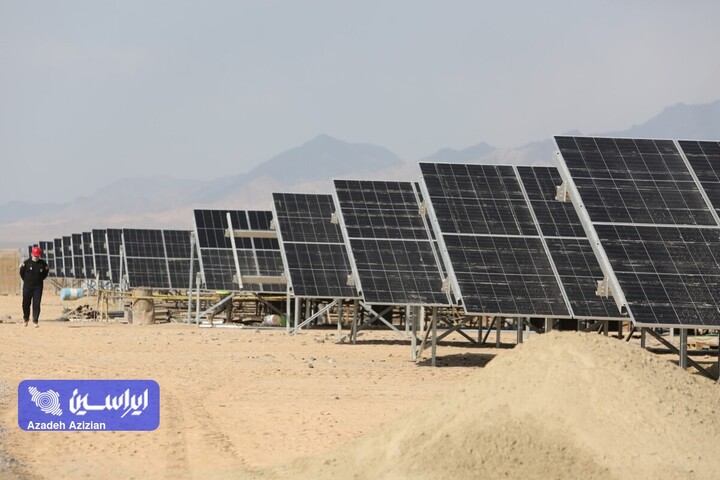
Decommissioned solar panels are also poised to supply a portion of the raw materials required by future generations of the industry. Despite the rapid expansion of solar capacity, solar panel recycling has traditionally focused on glass and aluminum, while recovering higher-value materials such as silver and silicon received less attention due to cost and technical complexity.
New technologies are transforming this landscape. Researchers at the Netherlands Organisation for Applied Scientific Research (TNO) have developed a laser-based recycling process capable of recovering silicon at up to 99.998% purity and silver at 99.7% purity, reporting a total material recovery rate of approximately 97%.
In Australia, researchers at the University of Newcastle have utilized flotation methods—historically used in the mining sector—to successfully recover nearly all silver from end-of-life solar panels, demonstrating the viability of this approach for industrial-scale application.
Projections by Rystad Energy indicate that the market value of recoverable materials from solar panels could rise from approximately $2 billion today to nearly $80 billion by 2050. The firm also estimates that recycling panels installed in 2020 could potentially supply 8% of polysilicon, 11% of aluminum, 2% of copper, and 21% of silver needed for solar panel manufacturing by 2035.
Wind Turbine Blades Serving Other Industries
Due to their composite material structure, wind turbine blades have long presented one of the most challenging recycling hurdles in the sector. However, emerging technologies are enabling their repurposing across other industrial sectors.
French environmental firm Veolia processes fiberglass blades into shredded material that can replace a portion of coal, silica, and limestone in cement kilns. Similarly, US-based Regen Fiber utilizes materials derived from retired turbine blades to manufacture reinforcing fibers used in concrete, asphalt, and composite applications.
An analysis by sustainability firm Quantis reveals that processing a single 7-ton shredded turbine blade in a cement kiln can reduce coal consumption by 5 tons while offsetting the need for 2.7 tons of silica, 1.9 tons of limestone, and nearly 1 ton of other raw minerals.
Power Grids: Another Reservoir for Metals
Modernizing power grids also unlocks substantial potential for mineral recovery. Grid expansion—driven by the need to connect renewable power plants, electrify transportation, and meet growing electricity demand—requires massive quantities of copper, aluminum, and steel. A significant volume of these metals already exists within aging grid infrastructure.
As transformers, substations, and transmission line equipment are replaced, embedded copper, aluminum, steel, and other components can be reclaimed and reintroduced into manufacturing cycles. American steelmaker Nucor has established specialized facilities dedicated to recycling decommissioned power equipment, reporting that these centers can double the recovery rate of copper and other non-ferrous metals used in manufacturing new grid infrastructure.
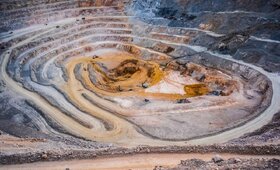
Overall, scaling up recycling efforts does not eliminate the need for primary mineral extraction, as rising global demand will still necessitate new mine developments. Nevertheless, accelerating equipment recovery will expand the share of secondary raw materials within the global supply chain. In this way, a portion of the infrastructure being constructed today for the energy transition will become the raw material source for future generations—a trend that can relieve pressure on mineral resources, lower extraction costs, and reduce reliance on virgin raw materials.











نظر شما