

The Necessity of a Paradigm Shift in an Arid Climate As the Central Plateau of Iran grapples with severe water stress and consecutive droughts, the sustainability of major strategic industries hinges on a fundamental revision of resource consumption patterns. Recognizing these climatic risks and its social responsibility to ward the Zayandeh Rud basin, Mobarakeh Steel Company (MSC) has formulated its macro-strategy based on the “Water-Energy Environment Nexus.” The ultimate goal of this approach is to completely sever industrial dependence on raw river water and supply 100% of production needs through sustainable and unconventional sources.
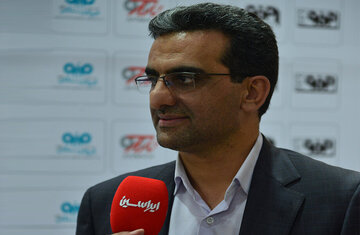
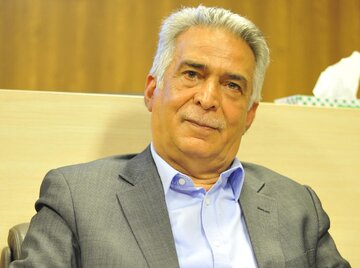
Performance Record: Setting a Global Efficiency Record An analysis of the historical water consumption trends at this industrial complex reveals a full-scale productivity revolution. While steel production has nearly tripled compared to the initial design (rising from 2.4 to 7.4 million tons), total water consumption has not only refrained from increasing but has actually decreased to half of the initial projections. Amir Tabatabaian, MSC’s Energy and Fluids Manager, outlining this achievement, announced: “By setting an ex-traordinary specific water consumption record of 2.2m³ per ton of slab (vs. global benchmark average of ~3.3 m³/t, World Steel Association data).
This figure indicates that Mobarakeh Steel Company today ranks among the ‘driest’ and most efficient steelmakers in the world.” Three-Pronged Strategy: Technology Against Scarcity This success rests on three pillars:
1. Wastewater Substitution (Sustainable Source): By investing in sewage networks for 9 regional cities (including Mobarakeh, Zarrin Shahr, and Safayieh), MSC has transformed the environmental threat of sewage into an industrial opportunity. Currently, 8.5 million cubic meters of sustainable water are supplied annually through this method. With the completion of development plans, this capacity will reach 13 million cubic meters, covering 25% of the company’s total water requirements.
2. Cooling Revolution: Given the high evaporation rate in cooling towers, the project to convert “Wet” towers to “Hybrid” ones has been initiated. Furthermore, in the new 914 MW Class F power plant, the use of a “Closed Cycle” cooling system has reduced water consumption to a negligible 0.008 cubic meters per megawatt.
3. Industrial Recycling: Modernizing treatment plants with advanced Ultrafiltration (UF) and Reverse Osmosis (RO) technologies ensures the maximum return of water to the production cycle.
Vision: Ending Industrial Withdrawal from the Zayandeh Rud The Energy and Fluids Manager identified the water transfer project as the final link in this chain, emphasizing: “Our ultimate goal extends beyond the factory borders. With the completion of the early phase of the Oman Sea water transfer mega-project, 70 million cubic meters of sustainable water will reach Isfahan province annually. The arrival of this volume means the complete release of industrial withdrawals from the Zayandeh Rud and fulfilling the industry’s debt to the revival of this civilization-building river.”
Leading the Green Transition in the Steel Industry
MSC’s Comprehensive Strategy for Sustainable Water Management

This report outlines MSC’s comprehensive water strategy, demonstrating how wastewater substitution and record-breaking efficiency of 2.2 m³/t of slab have paved the way for zero river dependency upon the arrival of seawater






نظر شما