


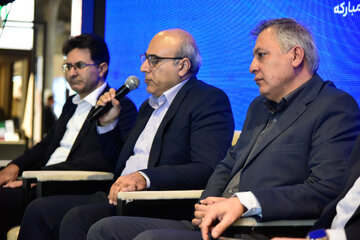
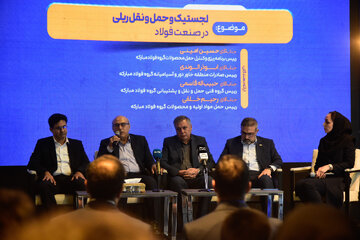
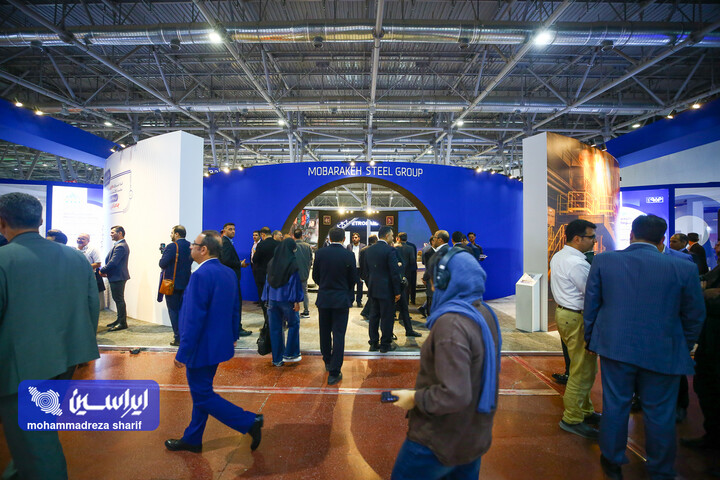
According to the analytical news outlet IRASIN, aligned with the implementation of the EU Carbon Border Adjustment Mechanism (CBAM) and the necessity of curbing greenhouse gas (GHG) emission intensity across the value chain, a specialized session titled "EU Carbon Border Adjustment Mechanism (CBAM) – From Challenge to Strategic Opportunity" was organized at Isfahan University of Technology by the Environment Committee of the Iron and Steel Society of Iran, held on the sidelines of the 2026 Steel Symposium. The session convened export, finance, R&D, and environmental executives from national steel companies, alongside academic faculty and graduate students.
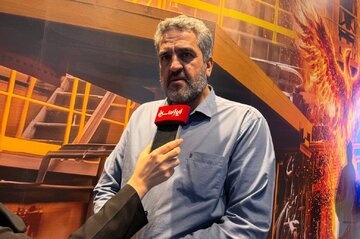
Mohammad Rahmati, Environmental Specialist at Mobarakeh Steel Group
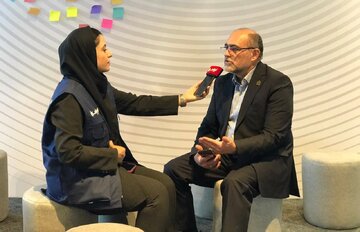
Mohammad Rahmati, Environmental Specialist at Mobarakeh Steel Group, outlined the core topics of the three-hour session during an interview with IRASIN, examining climate dimensions, emission calculation methodologies, and adaptation strategies for Iran's steel industry to align with new international requirements.
From Global Climate Commitments to the Emergence of CBAM
Highlighting international developments in climate change, Rahmati stated: "Defining climate change based on the latest international standards for greenhouse gases and carbon neutrality (ISO 14068) alongside the requirements to achieve UN Sustainable Development Goals (ISO 53001) proves that this issue is no longer optional, but a global imperative. From the Paris Agreement at COP21 (2015), which committed nations to temperature limits, to the COP28 milestone in Dubai (2023) emphasizing transition away from fossil fuels, global management standards and regulatory bodies have steadily moved toward establishing mechanisms like the EU CBAM and Emissions Trading Schemes (ETS)."
Elaborating on CBAM regulations and their distinctions from ETS and carbon taxes, he added: "The timeline of this mechanism—from its transition period starting in 2023 to its definitive implementation phase in 2026, accompanied by tariffs, benchmarks, and national compliance criteria—serves as a serious wake-up call and a powerful catalyst to re-engineer steel manufacturing processes."
Methodological Complexities in Calculating GHG Emissions
Comparing various GHG accounting frameworks, the Mobarakeh Steel Group environmental specialist noted: "The session evaluated ISO 14064-1 (organizational GHG accounting), ISO 14067 (product carbon footprinting), worldsteel methodologies, and CBAM requirements side-by-side. Through sample calculations for one ton of steel slab, system boundaries for each methodology were established: ISO 14064-1 addresses organizational Scope 1, 2, and 3 emissions; ISO 14067 measures product lifecycle emissions; whereas CBAM focuses strictly on direct process emissions and specified precursors."
Detailing CBAM methodology and the calculation of Specific Embedded Emissions (SEE) for the Direct Reduced Iron–Electric Arc Furnace (DRI-EAF) route, Rahmati explained: "A numerical example demonstrated that carbon certificate costs are directly dictated by the 'emissions gap relative to the benchmark' of that specific production route rather than absolute emissions figures alone. Consequently, an exporter operating a Blast Furnace route with higher absolute emissions might pay lower certificate fees in 2026 than a lower-emission DRI-EAF producer. However, this effect is temporary; as free allocation factors decline from 97.5% in 2026 down to zero by 2034, costs will apply fully to actual real-world emissions."
Mobarakeh Steel Group's Experience: From Data Governance to Green Steel Strategy
Reflecting on CBAM's impact on the Iranian steel sector and the urgency of establishing a decarbonization roadmap, Rahmati remarked: "An effective compliance strategy relies on verifying actual product data, selecting optimal declaration pathways, and narrowing emission intensity relative to production route benchmarks. Mobarakeh Steel Group has led by example across the national industry by instituting senior governance structures for quality control and sustainability, elevating environmental priorities from basic reporting into the strategic decision-making core of the organization."
He added that calculating product carbon footprints, implementing sustainability accounting, and drafting a comprehensive sustainability and environmental master plan targeting the 2035 Horizon represent other key initiatives undertaken by the complex.
In conclusion, drawing from attendee feedback, Rahmati summarized the core takeaways of the session:
- Alignment with ISO 53001: Climate change stands as a central catalyst for achieving sustainable development in 2026.
- Turning Threats into Strategic Opportunities: CBAM can serve as a catalyst for smart manufacturing, digital transformation, renewable energy integration, and waste-to-value creation.
- Data Governance: The foundational starting point for any optimization is systematic, high-quality data collection; without reliable data governance, a decarbonization roadmap remains merely theoretical.
- The Green Steel Paradigm: Green steel is not limited solely to hydrogen adoption; it represents a comprehensive transition framework across the entire value chain, encompassing water, energy, and material optimization. Green steel today centers on resource optimization and artificial intelligence, whereas green steel tomorrow will rely on breakthrough technologies such as plasma and hydrogen. At Mobarakeh Steel Group, this approach is no longer just a tagline, but an integral mandate guiding all corporate decisions.





نظر شما