
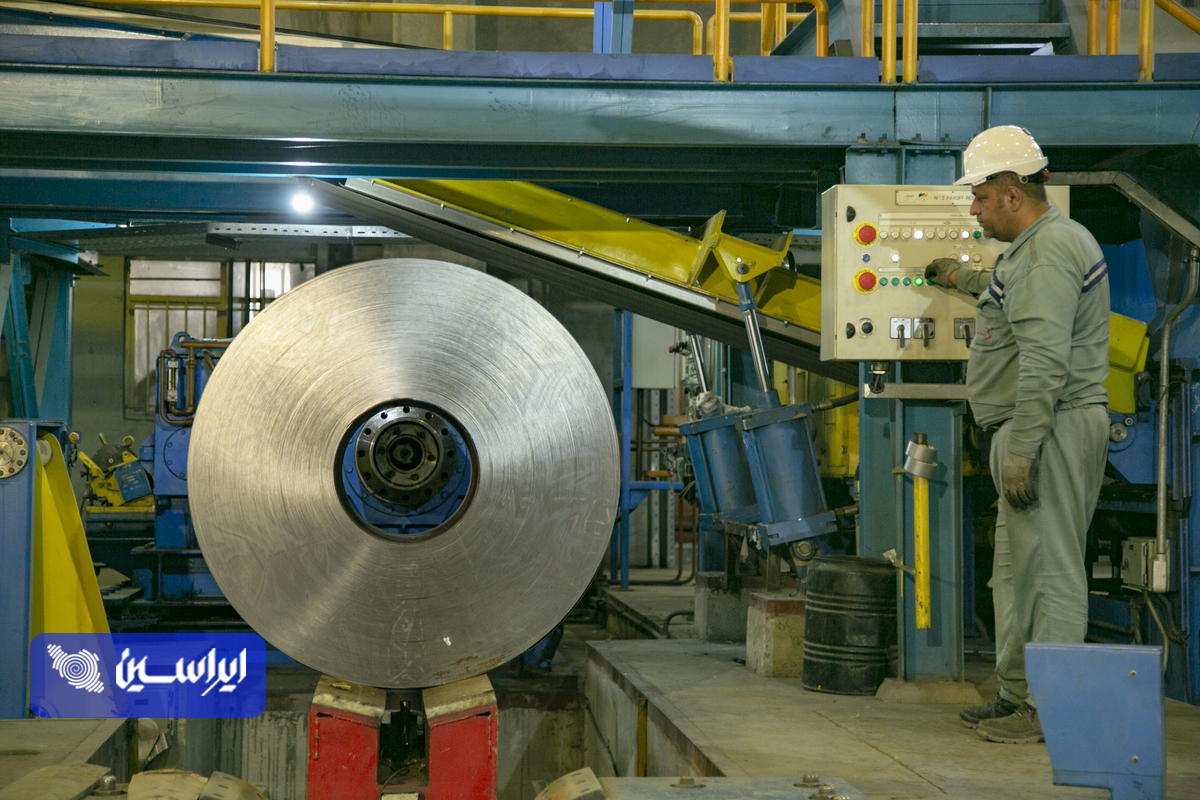

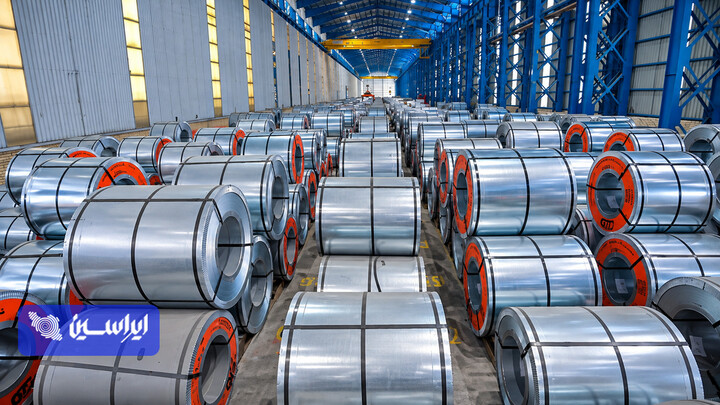
According to the analytical news outlet IRASIN, in today’s steel industry, profit margins are no longer hidden within melting furnaces and million-ton volumes; instead, they reside in millimeters, rolling precision, and mastery over the value chain. Iran’s downstream industries—particularly the vital food and packaging sectors—have for years paid the price of a structural disconnect: heavy reliance on imported black plate. Now, the launch of the 150,000-ton cold rolling project at Tavanavar Asia Steel Industries marks a classic strategic move to reshape the competitive landscape.
Strengthening Bargaining Power Against Suppliers
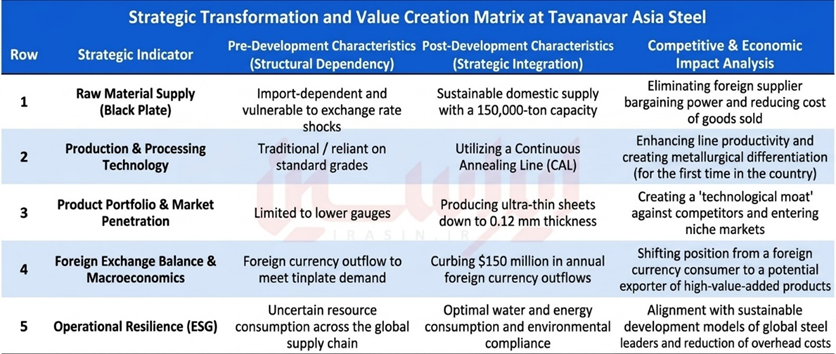
In strategic management literature, an enterprise that imports its strategic raw materials remains perpetually hostage to supplier bargaining power and macroeconomic volatility. Tavanavar Asia Steel’s strategy to construct a black plate production line stands as a textbook example of backward vertical integration. By moving upstream toward the source of supply, the company internalizes geopolitical and foreign exchange risks, upgrading its value chain from a fragmented structure into an integrated model.
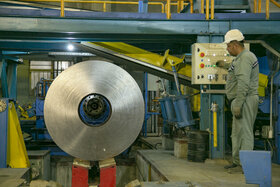
Conquering the 0.12-Millimeter Frontier
In the global specialty sheets market (such as electrical steels or tinplate), technology acts as a formidable barrier to entry. Achieving a thickness of 0.12 millimeters requires ultra-tight tolerances and advanced cold rolling capabilities. By pairing this capability with a continuous annealing line, Tavanavar Asia Steel has effectively dug a technological moat around its business.
Global steel industry leaders safeguard their profit margins using precisely this formula: manufacturing products that second-tier players cannot produce at competitive prices due to technological limitations. This technological edge in the domestic market will substantially bolster Tavanavar Asia Steel’s pricing power.
Foreign Exchange Diplomacy and Macroeconomic Spillover Effects
The figures behind this project speak the language of macroeconomics. Stemming $150 million in annual foreign currency outflows—amid the nation’s foreign exchange constraints—grants the company a strategic sovereign advantage. However, the primary showdown will unfold in export markets. By completing this chain and lowering unit production costs, Tavanavar Asia Steel’s products gain the potential to penetrate regional markets and generate fresh foreign currency revenues.
Furthermore, the spillover effects of this investment will materialize through the expansion of ancillary regional industries, direct and indirect job creation, and the strengthening of logistics and packaging services.
Beyond Survival
Executing the cold rolling and black plate production project at Tavanavar Asia Steel Industries is not merely a reaction to current market demands; rather, it represents a structural re-architecture aimed at securing survival and profitability for decades to come. Within this analytical framework, the motto "Today’s Investment, Tomorrow’s Industrial Authority" takes on precise meaning: an enterprise that brings its supply chain bottlenecks under control today will emerge as the undisputed leader in pricing and market share tomorrow. Tavanavar Asia Steel is now poised to dictate the rules of the game across Iran’s and the region’s tinplate industry.











نظر شما