

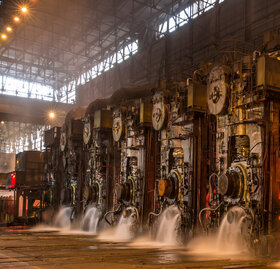
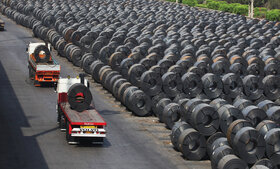
Today, the global steel industry stands at a historical turning point where the rules of the game have fundamentally shifted. Traditional competitive criteria, such as product quality and production cost, while still necessary, are no longer sufficient on their own to guarantee survival and progress. At Mobarakeh Steel Group (MSG), with a deep understanding of these changing global paradigms,we are evolving from a pure manufacturer into a development-oriented industrial, technological, and social enterprise. This shift in approach is not a luxury choice, but a strategic necessity to maintain Iran’s position in international markets and to fulfill ourobligation to national sustainable development. In Mobarakeh Steel’s Horizon 2035 vision (1414), environmental sustainability and ESG governance (Environmental, Social, and Governance) lie at the very heart of our strategy. We believe that environmental preservation is no longer aperipheral activity or a promotional gesture, but the core of our business. Moving toward “Green Steel,” developing hydrogen-based reduction technologies, and transitioningto a low-carbon economy constitute our roadmap for competing in global markets—markets that, in the near future, will only welcome products with a low carbon footprint. However, in the geography of Iran, and particularly the Central Plateau, no challenge is more strategic than “water.” The water crisis in Isfahan has doubled our sense of responsibility. At Mobarakeh Steel, we have honored the pledge we made to thenoble people of Isfahan and the environment. Today, I declare withcertainty that with the full implementation of the mega-project to transfer water from the Sea, we will end raw water withdrawals from the Zayandeh Rud for industrial production upon full commissioning of the Oman Sea transfer project’s early phase. This achievement is a clear symbol of intelligent management of a vital resource. Our water strategy rests on three pillars: complete recycling of internal wastewater, utilization of treated wastewater from surrounding cities, and water transfer from sustainable marine sources. Through massive and timely investments, 50% of our required water is now supplied via recycling and treated wastewater. These technological measures have transformed Mobarakeh Steel Company into one of the “driest steelmakers in the world”(in terms of water consumptionper ton of production); we consume only 2.2 m³ of water to produce one ton of slab—a figure that stands as a proud and efficient record when compared to globalstandards
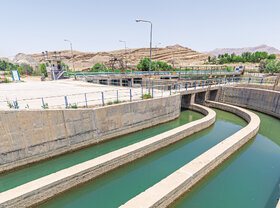
and other industries.The mega-project of transferring water from the Oman Sea to Isfahan is not merely an industrial project to meet factory needs; it is a practical and historic step toward saving the Zayandeh Rud, preserving underground water resources, and revitalizing life in this region. Alongside these environmental initiatives, our approach to social responsibility has also shifted from charitable acts to “sustainable social investment.” The cancer screening plan for 1.7 million citizens and rural empowerment initiatives are examples of this modern perspective. We are committed to intertwining industrial development with environmental sustainability and social welfare to leave a lasting legacy for future generations.
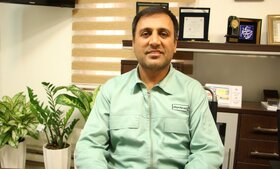
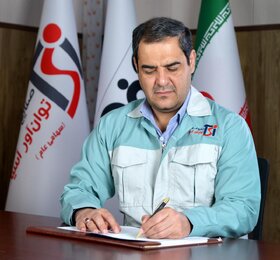
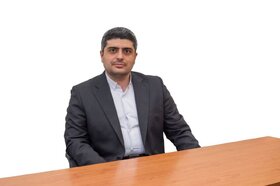
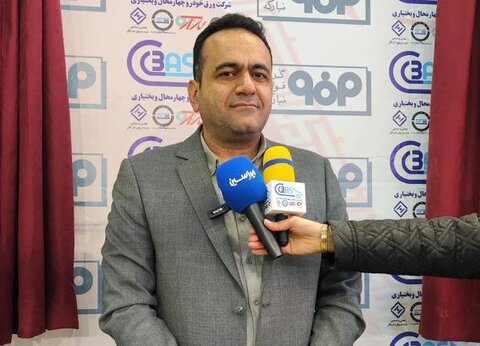
MSC’s Vice President of Operations*
Restoring Hope to the Plateau
Mobarakeh Steel Company’s historic Seawater Transfer
*Gholamreza Salimi

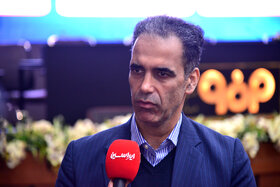
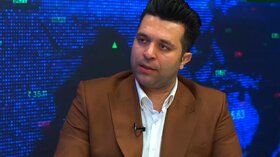
The CEO outlines the strategic shift toward ESG governance, declaring that with the full implementation of the Seawater transfer mega-project, MSC will reduce its raw water withdrawal from the Zayandeh Rud river to zero.
نظر شما